


.svg)
.svg)
.svg)
.svg)
.svg)
.svg)
.svg)
.svg)
.svg)
.svg)
.svg)
.svg)
.svg)
.svg)
.svg)
.svg)
.svg)
.svg)
.svg)
.svg)
.svg)
.svg)

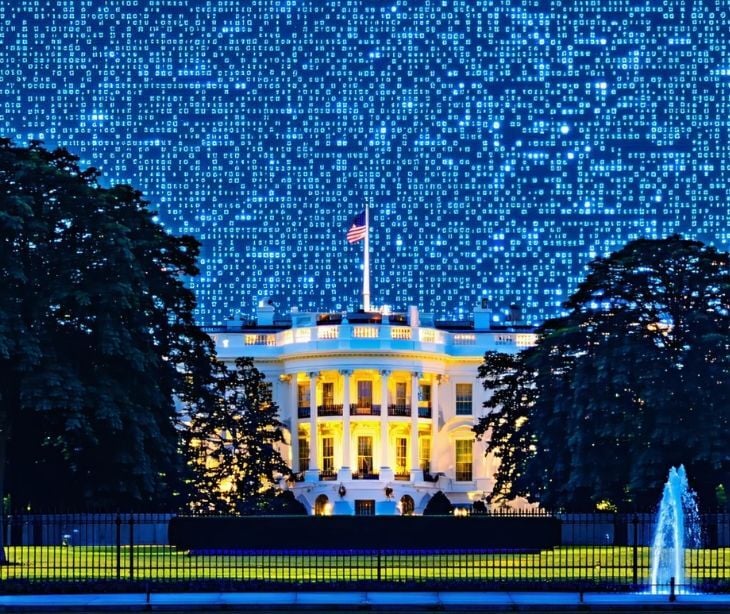
The Trump administration is beginning a new initiative that allows private companies to assist in operations against cybercriminals.
What happened
In a memo signed on August 12th, 2026 Trump called for the National Coordination Center (NCC), an initiative focused on analyzing network activity and cyberthreats, to create a program for private companies to conduct cyber surveillance and initiate their own operations against cyber criminals, with government oversight. The program would task the NCC with creating specific partnerships with private sector companies to use their employees or technology to share knowledge about cybercriminals. The program is unique in that it increases private sector involvement in fighting cybercrime, something that has generally been left to government agencies.
The initiative is broadly part of the White House’s offensive cyber strategy, which is in response to growing cyber threats; the White House reported that consumers lost more than $20.9 billion in cyber-enabled crime.
Going deeper
Alongside the memo, the White House released a fact sheet about how federal law enforcement can partner with private companies. The new initiative calls for:
- Leveraging technology from the private sector to aid inU.S. government cybersecurity operations
- Establishing a framework where private companies are encouraged to enter into agreements with other private companies and the government to gather information on threat actors and propose actions against these actors
- Creating procedures to review and conduct these limited cyber operations.
The fact sheet further notes that the initiative will specifically fight ransomware attacks and phishing campaigns, stating them as a broad concern for Americans. According to the report, 73% of U.S. adults have experienced some type of online scam or attack, and many believe it poses a significant threat to the US.
The backstory
Trump has been calling for a more aggressive cyberstrategy in his second term. In March, the White House released its National Cyber Strategy, which described how multiple departments, including the Departments of State, Justice, and Homeland Security should coordinate to prevent attacks. According to Politico, while the Biden administration focused more on regulations and defense, Trump is more focused on proactively confronting and detecting threats. According to the White House, the national cyber strategy is focused on “creat[ing] real risk for adversaries who seek to harm us, and impose consequences on those who do act against us.”
In the know
Both Trump’s National Cyber Strategy, and his efforts like the memo from August 12th, show concern over US cybersecurity. While concern may primarily revolve around security for government departments and the military, attacks against any critical industry, including healthcare, are damaging to the country. According to the American Healthcare Association (AHA), cyberattacks on healthcare have huge consequences for individual wellbeing, “Ransomware attacks on hospitals are not white collar crimes, they are threat-to-life crimes because they directly threaten a hospital’s ability to provide patient care, which puts patient safety at risk.” John Riggi, Senior Advisor for AHA’s Cybersecurity and Risk Advisory, says attacks “should be aggressively pursued and prosecuted by the US government.” Riggi noted that there has been an uptick of crimes carried out by adversarial nations, meaning that the goal of these attacks may be to weaken US infrastructure.
The big picture
Paubox frequently reports on the severity of data breaches and the costs associated with them. We previously found that breaches on average cost an organization between $9.8 million and $11 million per incident. These breaches impact specific victims, who become more vulnerable to threats, as well as whole communities, who may have to deal with decreased security or even the shuttering of hospitals. While every organization has an obligation to do everything they can to prevent a data breach, initiatives like this also show the wider interest the government has in promoting cybersecurity.
FAQs
What will happen if the private sector gets involved in cyber operations?
How the White House’s plan will unfold is unclear, but it could mean partnerships for using software or other tools, assistance in investigations, and information sharing regarding bad actors.
Are data breaches state-sponsored crimes?
Not always; there are many lone actors that target healthcare or other organizations purely for financial reasons. However, it’s become increasingly common for healthcare organizations to be hit by attacks that are also state-sponsored.
