


.svg)
.svg)
.svg)
.svg)
.svg)
.svg)
.svg)
.svg)
.svg)
.svg)
.svg)
.svg)
.svg)
.svg)
.svg)
.svg)
.svg)
.svg)
.svg)
.svg)
.svg)

PAUBOX FOR MICROSOFT 365
Make email with Microsoft 365 HIPAA compliant and secure
Automatic HIPAA compliance for email and AI-driven email protection against today’s most sophisticated email threats.
.png)
9,000+ companies use Paubox to secure over 100 million emails every month.
-1.png?width=222&height=61&name=Mark_Cuban_Cost_Plus_Drug_Company_logo%20(1)-1.png)




Protect email while using Microsoft 365
Healthcare teams rely on Microsoft 365 every day, but encryption doesn't happen automatically. By layering Paubox on top, organizations get seamless compliance and sophisticated inbound protection without changing their email workflow.

PROBLEM #1
Microsoft 365 isn’t HIPAA compliant by default
Even if you sign a BAA with Microsoft 365, not every email sent will be encrypted. And there's no guarantee that staff will remember to remove PHI from every email. Using Microsoft 365 alone is not HIPAA compliant.
73% of breaches are caused by unintentional actions.

PROBLEM #2
Default Microsoft 365 security isn’t enough
Cybercriminals are using AI to craft convincing phishing campaigns. In fact, 83% of phishing emails last year leveraged AI. Misconfigured settings expose organizations to unnecessary risk.
You need a solution that removes the burden from your team and strengthens your defenses.
Why Paubox + Microsoft 365
HIPAA compliance, built in
Paubox plugs directly into your existing Microsoft 365 account and makes every email HIPAA compliant by default.
-1.svg)
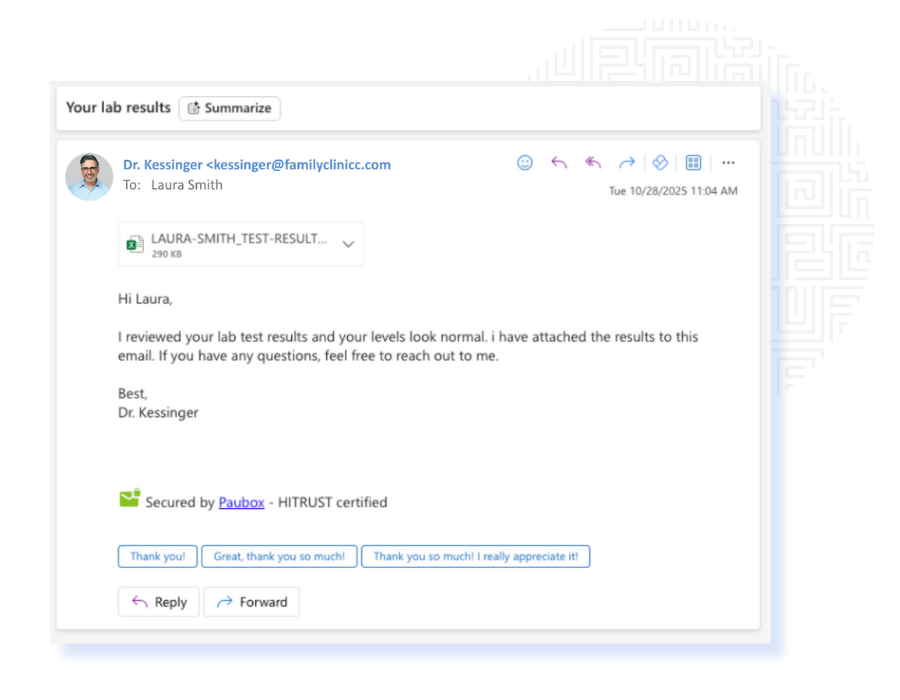
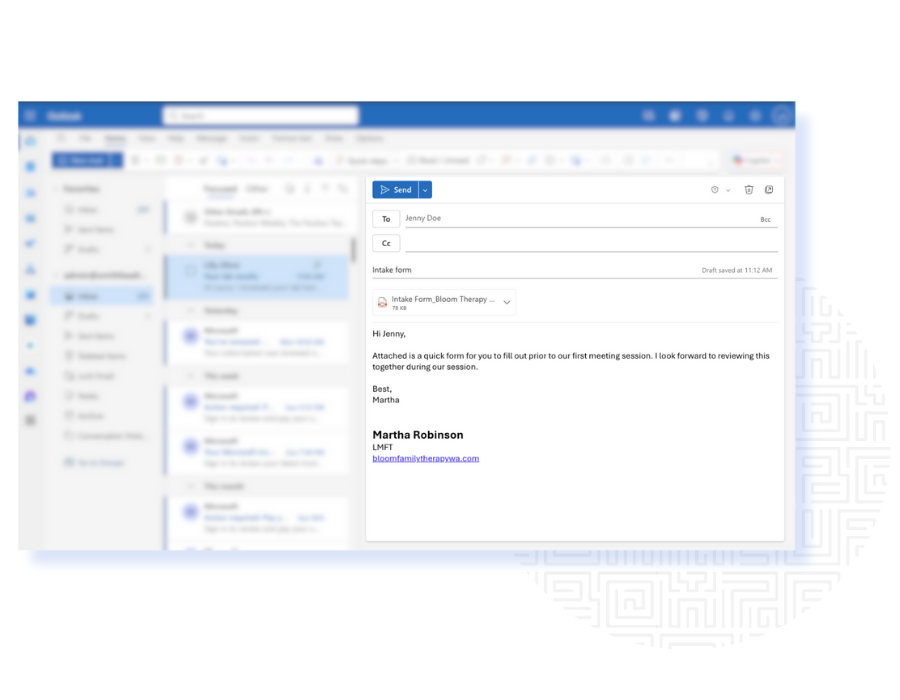
Seamless for senders and recipients
Your team keeps using Outlook exactly as they do today. Recipients receive encrypted messages right in their inbox, no portals, logins, or passwords required. Important emails get read instead of getting lost in clunky systems.
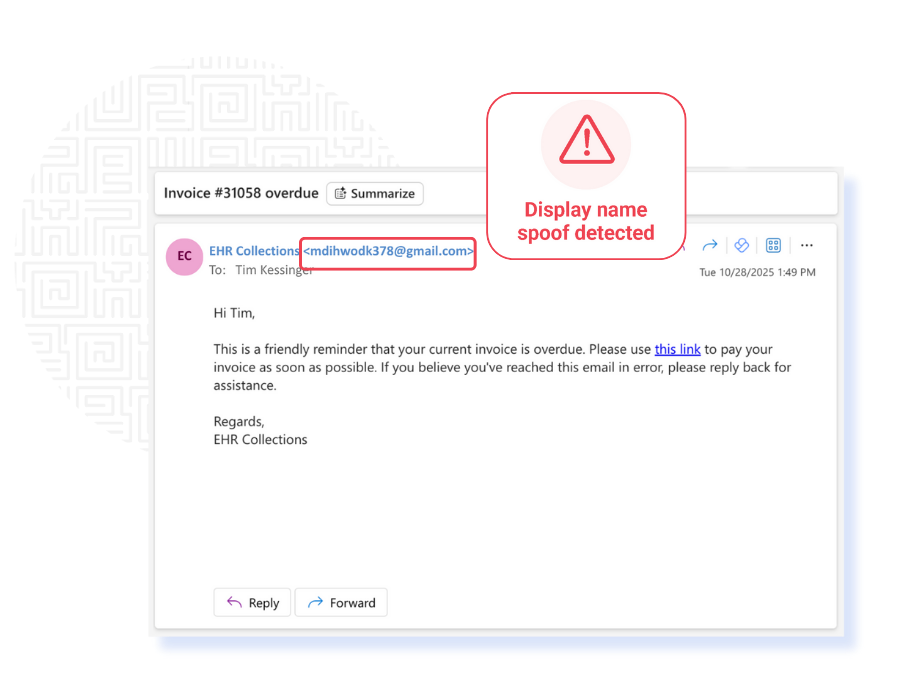
AI-powered email security
Defend against modern, AI-driven threats that Microsoft won’t catch:
COMPLIANT MICROSOFT 365
How it works
.svg)
Use your existing account
Keep your current Microsoft 365 account and custom domain. No need to migrate or rebuild.

Quick
setup
Get started in minutes on your own or let our U.S.-based team guide you.

Automatic
encryption
Every outbound email is encrypted with TLS v1.2 or higher, ensuring HIPAA compliance without any extra steps.

The full suite
of protection
Encrypt outbound email, protect against attacks, archive email for compliance, and prevent sensitive data from leaking.

Why healthcare
chooses Paubox

“We were so used to our encryption and security technology having complications and being hard to use. With Paubox, you don’t have to do anything – just send and receive your email. It’s amazing.”
– Elena Yau, Five Acres

-1.svg)
