


.svg)
.svg)
.svg)
.svg)
.svg)
.svg)
.svg)
.svg)
.svg)
.svg)
.svg)
.svg)
.svg)
.svg)
.svg)
.svg)
.svg)
.svg)
.svg)
.svg)
.svg)
.svg)

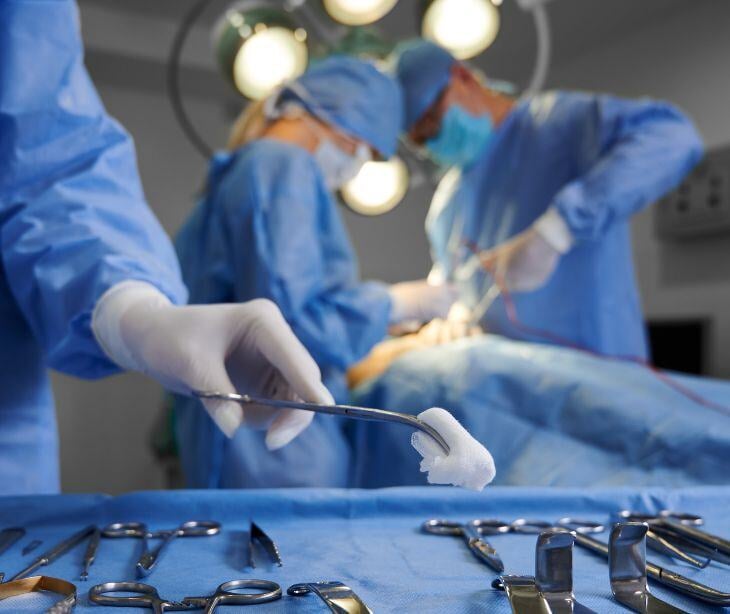
“Good communication with patients is essential in aesthetic surgery throughout the patient journey, explains Oxford University Press Expert Insights for Communicating With Aesthetic Patients.
In the US, the ubiquitous nature of email makes it a valuable communication tool in aesthetic practices. However, standard email platforms, like Gmail or Outlook, may expose sensitive patient information to privacy and security risks. That’s why healthcare providers must use a HIPAA compliant email solution to securely communicate with patients.
Why communication matters in aesthetic surgery
Aesthetic surgery outcomes are highly subjective, where two patients with nearly identical surgical results may have dramatically different levels of satisfaction. The study explains that “the challenge of expectation management is crucial to optimizing patient satisfaction, which may be irrespective of objective outcomes.”
In other words, technically successful procedures may leave patients dissatisfied if expectations were poorly managed. Patients have specific goals influenced by social media, celebrity culture, edited photographs, and online before-and-after galleries. Yet, surgeons must explain the limitations of anatomy, healing, tissue quality, and biological unpredictability.
The article suggests that successful outcomes depend on alignment between patient expectations and surgical reality. In the study, surgeon Richard J. Warren (M.D.) explains, “At the end of the day, my job is to make you happy, and the hardest thing for me is to get inside your mind and figure out exactly what you want. The better you can do at explaining that to me, the better job I can do.”
HIPAA compliant emails allow these conversations to continue outside the consultation room. Following in-office discussions, surgeons can securely email written explanations, educational materials, postoperative guidance, consent information, and follow-up communication that patients can revisit whenever needed.
HIPAA compliant email solutions, like Paubox, secure patients’ protected health information (PHI) during transmission and at rest. Its security reinforces patient trust while improving consultation quality, reinforces realistic expectations, strengthens patient relationships, reduces misunderstandings, and supports postoperative recovery.
How HIPAA compliant emails can help
Manage expectations
Expectation management is a strong predictor of patient satisfaction in cosmetic surgery. According to the study, one should “only proceed with an operation when their expectations are realistic, with the hope of improving satisfaction with the outcome.”
The study explains that surgeons spend years refining the language they use to help patients understand what is realistically achievable. HIPAA compliant emails can facilitate these conversations in several ways.
After consultations, surgeons can securely send personalized summaries explaining procedural limitations, expected healing timelines, possible asymmetries, scar development, swelling patterns, and realistic outcome expectations. These summaries can also help patients remember information discussed during appointments.
The article specifically recommends that surgeons “Follow up all your consultations with a written letter to the patient, including the discussion you had, the potential limitations of the procedure, and the need for realistic expectations and patience postoperatively to allow the final result to settle with time.”
HIPAA compliant email makes this recommendation scalable, so practices can send customized postoperative instructions and consultation summaries directly to patients’ inboxes. Patients can reread them before surgery, during recovery, or whenever concerns arise.
Moreover, having access to concise postoperative communication can prevent unnecessary panic and give patients emotional reassurance. As surgeon Marc D. Pacifico explained, “Things that seem trivial now… suddenly can become magnified. So, it is important to recognize that even the tiny things and the minutiae we talk about are relevant and will have more relevance after surgery.”
Secure email communication allows practices to proactively address these “tiny things” before they escalate into dissatisfaction.
Improve patient education
Aesthetic surgeons must use HIPAA compliant emails to send evidence-based education to patients. Educational emails can include procedure explanations, recovery timelines, medication instructions, lifestyle recommendations, maintenance advice, etc.
Continuous education helps patients make more informed decisions. “The more you know, the better you will do, and the fewer surprises you have, the better you will do,” the research explains.
HIPAA compliant emails can, therefore, help patients understand healing timelines and procedural limitations, so they don’t develop unrealistic expectations or become distressed during recovery. These emails should also explain the unpredictability of biological tissue behavior. As evidenced by Surgeon Heather Furnas, “We are not cutting paper with scissors, and the stretch of your skin, your anatomic variations, and how you heal all impact the final result.”
Written follow-up emails allow patients to revisit these concepts asynchronously, improving comprehension and reducing postoperative frustration.
Enhance preoperative preparation
Proper preparation before aesthetic surgery can strongly influence surgical outcomes and recovery quality. HIPAA compliant email systems allow practices to automate and personalize preoperative communication. For example, secure emails can remind patients about smoking cessation, medication restrictions, weight management goals, compression garment preparation, and so on.
Surgeon Ivar van Heijningen commented on how lifestyle factors affect outcomes, stating, “Losing weight before a procedure benefits you 3 times over: You will have a better result, there is less risk for complications, and there is a good chance that you will be able to stay at that weight.”
HIPAA compliant email allows practices to consistently reinforce these recommendations, especially when patients may require multiple reminders before fully adopting preoperative recommendations. These emails can also be automated to reduce staff workload while maintaining HIPAA compliance.
Strengthen the surgeon-patient relationship
Oxford University Press explains that communication “directly influences the future of the doctor-patient relationship, the development of mutual trust, and the patient’s perception of the end result.”
HIPAA compliant email supports this, as patients who receive quick responses, personalized guidance, and secure communication often feel more supported, leading to a better patient-provider relationship.
For example, if a post-operative patient notices swelling, bruising, or asymmetry, they may start fearing that something has gone wrong. A quick HIPAA compliant email with photographs and reassurance from the surgeon can prevent unnecessary stress and avoid emergency visits.
Support long-term satisfaction
Aesthetic surgery often requires ongoing maintenance, skincare, lifestyle management, and follow-up treatments, as evidenced by Contemporary Approaches and Surgical Considerations in Managing Injectable Fillers in the Long-Term Aesthetic Patient.
Similarly, in the first-mentioned research article, surgeon Richard J. Warren explained, “Surgery for aging tissue does not freeze people in time; it turns the clock back.”
HIPAA compliant email allows practices to maintain long-term communication with patients after surgery. More specifically, providers can send follow-up email campaigns with maintenance treatment recommendations, sun protection guidance, scar care education, and recovery milestone check-ins.
Ultimately, these communications can help improve patients’ long-term satisfaction with surgical results.
Reduce miscommunication and revision
Miscommunication can cause dissatisfaction in aesthetic surgery. Patients may misunderstand implant sizing, scar placement, healing expectations, or procedural limitations. That’s why surgeons and patients must share the same vision before surgery.
In the words of surgeon Jennifer L. Walden, “I want to make sure our visions align before the procedure is done, because we try to get it right the first time and want to limit any revisions or size changes due to potential miscommunication.”
For reference, surgeons can use HIPAA compliant emails to share educational diagrams, sizing explanations, and postoperative progress updates. Patients can then reply with questions or review answers at a later stage. It also creates a documentation trail, keeping a clearer record of what was discussed, helping reduce disputes or misunderstandings later.
Additionally, secure communication can help practices identify dissatisfaction early before it escalates into negative reviews, complaints, or medicolegal issues.
Improve legal protection
The Oxford study notes that ineffective communication can contribute to “a breakdown in the surgeon-patient relationship and even medicolegal proceedings.”
Furthermore, “Medico-legal disputes in aesthetic body surgery commonly arise from preventable complications, especially when informed consent is inadequate or postoperative care is substandard,” explains A Systematic Review on Litigation and Complications Arising from Aesthetic Body Surgery.
As a result, “Standardised consent process, improved documentation, procedure-specific risk communication, and regulation of outpatient practices are critical to reducing litigation risk.”
Hence, using a HIPAA compliant email platform, like Paubox, creates a documented record of educational materials, informed discussions, postoperative instructions, and patient questions. Paubox email also offers advanced encryption, secure cloud storage, and audit logs that help practices demonstrate their HIPAA compliance.
Why standard email isn’t sufficient
Since aesthetic surgery often involves photographs, treatment plans, financial discussions, and deeply personal concerns, providers must uphold federal privacy regulations. Using a standard email platform, like Gmail, does not offer the necessary protections under HIPAA. It can also lead to unauthorized access, data breaches, and HIPAA violations.
Aesthetic providers must use a HIPAA compliant email platform, like Paubox, which signs a business associate agreement (BAA) that outlines security standards, permissible uses and disclosures of PHI, and what to do in the event of a data breach.
As a result, choosing the right HIPAA compliant platform can help aesthetic providers uphold federal regulations and improve their clinical communication strategy that directly influences patient understanding, emotional preparedness, recovery confidence, and long-term satisfaction.
FAQs
How does encryption help HIPAA compliance?
Encryption converts the content of the email into a form that is only accessible to the authorized recipient and not any other person or system. It prevents unauthorized access, ultimately, upholding HIPAA regulations.
Do providers need patient consent for HIPAA compliant emails?
Yes, a provider must get explicit patient consent before sharing their PHI through HIPAA compliant emails.
Learn more: A HIPAA consent form template that's easy to share
Can HIPAA compliant emails improve patient satisfaction?
Yes, providers can use HIPAA compliant emails to keep patients informed, improving their overall satisfaction with care.
Read also: How automated HIPAA compliant emails can increase patient satisfaction
