


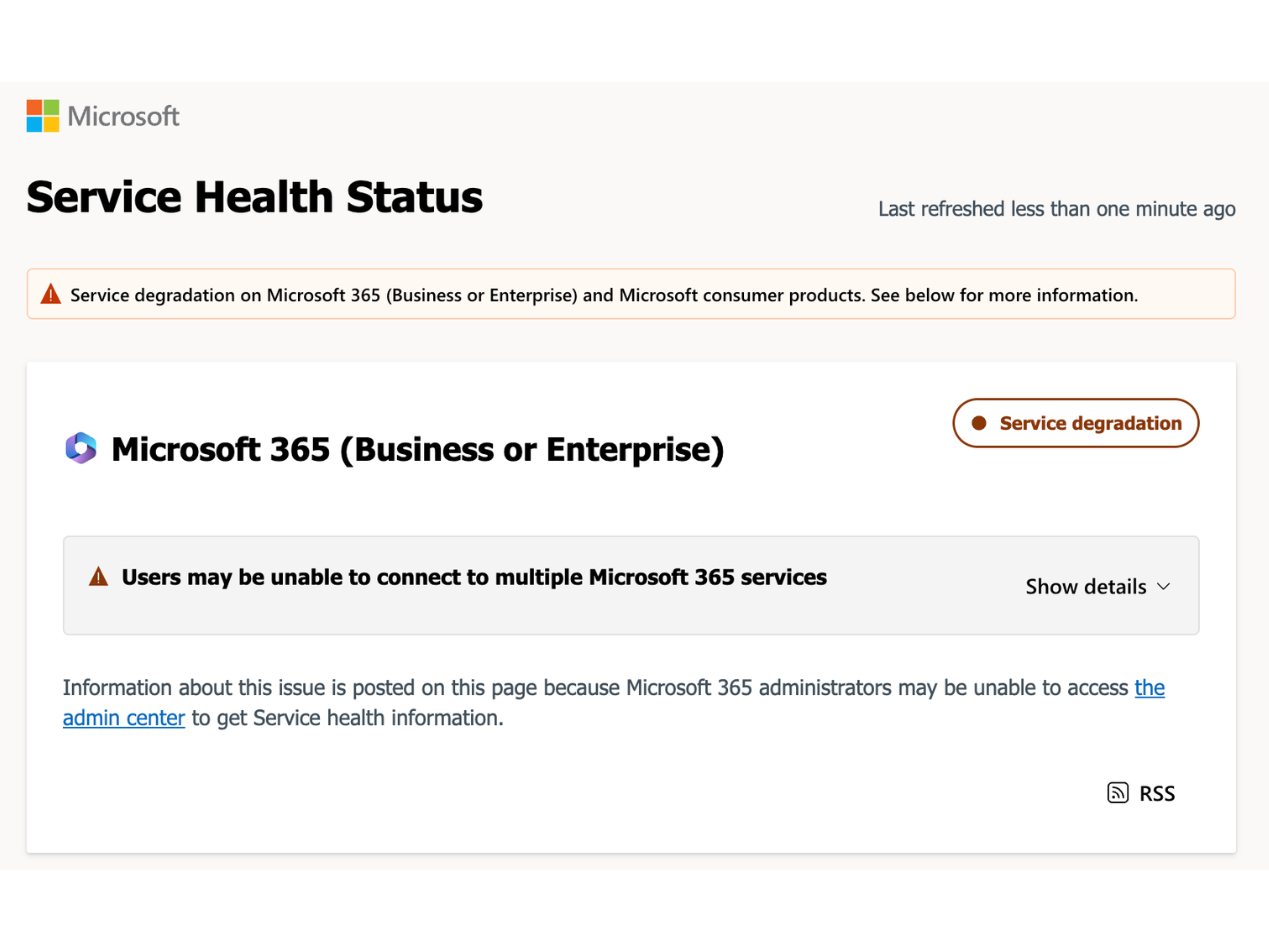
As of 10:30 a.m. PT today, Friday, Nov. 13, Microsoft 365 services remain down for thousands of customers globally.
The outage started yesterday morning and disrupted governments, schools, businesses, and healthcare organizations. It was first reported by Microsoft at 10:26 a.m. PT yesterday.
According to Microsoft, it was caused by "a technical issue not related to cyber or AI / agents."
This post provides updates from what we're seeing on our platform.
See also: Microsoft 365 outage knocks out Outlook email for hours
Microsoft 365 in U.S. healthcare
According to the Paubox 2026 Healthcare Email Security Report, Microsoft 365 is the leading email service provider in U.S. healthcare, with 79% of U.S. healthcare organizations surveyed reporting they use it.
That's a staggering percentage of healthcare organizations being negatively impacted by the current outage, now in its second day.
Paubox customers using Microsoft 365
As a recap, Paubox Email Suite wraps around cloud email service providers like Microsoft 365 and Google Workspace.
When an outage like this occurs, here's what Paubox does:
-
For Paubox Email Suite Standard customers on Microsoft 365, outbound email is queued on the Paubox platform
- For Paubox Email Suite Plus or Premium customers on Microsoft 365, inbound email is also queued on our platform
- When service is restored, Paubox automatically delivers the queued email to intended recipients.
Paubox current status
Here's where things stand now for our Microsoft 365 customers:
-
Outbound mail queues are down 72% since their peak yesterday. This shows service is being restored across Microsoft 365, though not entirely.
- Inbound mail queues are down 91% since yesterday.
- We are not aware of any customer email bouncing due to the outage. Paubox has queued all of it.
In my opinion, this outage is indicative of the maturation of the internet in general. Whether it’s ultimately determined the root cause was a configuration issue or malicious AI agents, the internet still has a lot of growing up to do.
