


.svg)
.svg)
.svg)
.svg)
.svg)
.svg)
.svg)
.svg)
.svg)
.svg)
.svg)
.svg)
.svg)
.svg)
.svg)
.svg)
.svg)
.svg)
.svg)
.svg)
.svg)

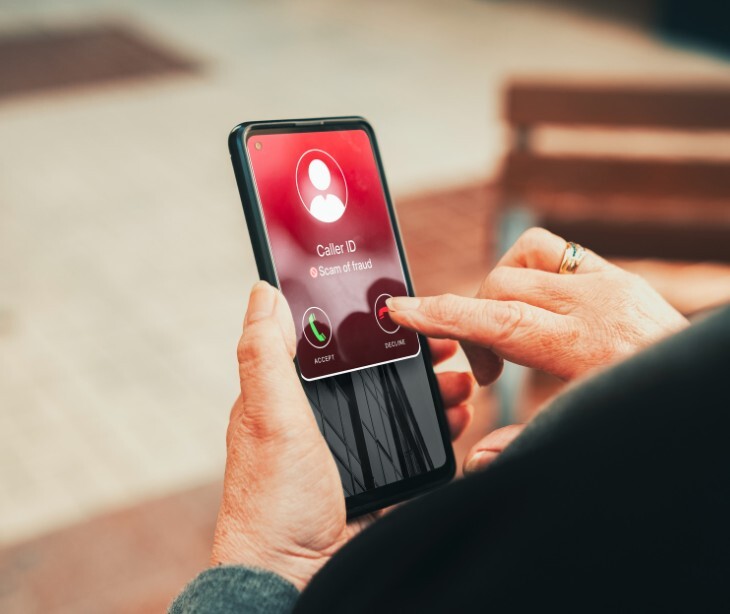
Rather than targeting individual employees with phishing emails, attackers are calling IT help desks directly to manipulate the people authorized to reset multi-factor authentication (MFA), unlocking access to entire SaaS ecosystems in a single call.
What happened
Researchers have documented an increase in vishing attacks against Okta single sign-on (SSO) environments in which attackers call a victim directly or contact their IT help desk and use social engineering to convince staff to reset MFA, enroll a new authenticator device, provide one-time passcodes, disclose passwords, or reset Okta credentials. According to SC World, once Okta is compromised via a successful vishing call, attackers gain access to an enterprise's connected SaaS platforms via single sign-on, enabling data exfiltration from SharePoint, OneDrive, Salesforce, and Google Workspace. The pattern mirrors tactics used by well-documented threat groups, including Lapsus$, Scattered Spider, and ShinyHunters, all of which have previously used help desk manipulation to reset credentials or enroll new authentication devices in breaches tied to large enterprise platforms.
Going deeper
The attack model exploits a structural gap in identity security: verification during a phone call cannot be cryptographically validated the way a hardware key or FIDO2 token can. A caller posing as a locked-out employee only needs enough personal information to sound credible to a help desk agent under pressure. According to BleepingComputer, Okta has documented custom phishing kits sold on a service basis that are designed specifically for live vishing calls, giving attackers a control panel that updates a fake authentication page in real time as the call progresses. When a service responds with an MFA challenge, such as a push notification or one-time code, the attacker directs the victim to enter it on the phishing page while the attacker intercepts and uses it simultaneously. Okta has reported that these platforms can bypass push-based MFA, including number matching, because the attacker controls what the phishing page displays to the victim during the call. Help desks typically follow the same process regardless of which account they are resetting, so a successful call against any high-privilege account grants attacker-controlled access to administrator functions across the entire organization.
What was said
Researchers told SC World that "instead of targeting individual users, attackers are moving upstream to bypass MFA at the identity provider level, manipulating the IT help desk to unlock access across the targeted organization." Researchers added that attackers are "thinking: why break into a single account when we can go after the systems that create and manage identity. Instead of breaking a window or stealing a spare key, they're targeting the locksmith. If they gain control of an identity provider or help desk workflow, they can effectively generate a master key that unlocks many systems across the organization." Researchers also noted that "this isn't a vishing problem. It's a centralized access problem. Compromise any enterprise SSO provider, and you inherit its trust into M365, Salesforce, Slack, the VPN, and everything else wired through SSO."
In the know
The vishing threat against identity providers has widened significantly in 2026. According to The Hacker News, Google's threat intelligence team documented a wave of ShinyHunters-style attacks in early 2026 in which attackers combined vishing calls with branded credential harvesting pages to steal SSO credentials and MFA codes, gaining access to Okta customer accounts and subsequently downloading sensitive data from SharePoint and OneDrive. Researchers tracking the activity noted that attackers impersonated IT staff to deceive victims into providing credentials and MFA codes since at least January 2026. Years of phishing awareness training have made employees more cautious about email, which researchers note is precisely why attack delivery has shifted to voice: the mental defenses staff have developed for email do not transfer automatically to a phone call, particularly one using AI-generated voice cloning to imitate known colleagues or executives.
The big picture
Healthcare IT environments are particularly exposed to help desk vishing because they operate under constant pressure to restore clinician access quickly. When a physician calls the help desk saying they are locked out of their Okta account before a scheduled procedure, the standard response is to reset access as fast as possible. Attackers exploit that operational urgency directly. According to Paubox's Healthcare IT Is Dangerously Overconfident report, 92% of healthcare IT leaders express confidence in their ability to prevent email-based data breaches, yet the same organizations frequently lack formal incident response workflows and overrely on human judgment as a security control. A successful Okta vishing attack bypasses every email-layer defense an organization has deployed, because the attack never touches email. Once an attacker controls an Okta Super Administrator account, they can impersonate any user in the tenant, access every application connected through SSO, and export protected health information (PHI) from connected systems without any of the controls designed to catch email-based threats.
FAQs
What is vishing, and how does it differ from standard phishing?
Phishing delivers malicious content through email or messages that recipients can examine at their own pace. Vishing uses a live phone call to apply real-time social pressure, making it harder for the target to pause and verify the caller's identity. The live interaction also lets attackers adapt their approach based on the target's responses.
Why does compromising an identity provider give attackers broader access than compromising a single account?
An identity provider like Okta acts as a central authentication hub for all connected applications. Gaining Super Administrator access allows an attacker to create new credentials, impersonate any user across every connected platform, disable MFA requirements, and configure second identity providers for persistent access, all without needing to compromise each application individually.
What specific controls reduce the risk of help desk vishing attacks?
Implementing phishing-resistant MFA, such as FIDO2 security keys or passkeys, removes the ability to intercept one-time codes over a phone call. Requiring verified callback procedures before any credential reset, enforcing strict identity verification for help desk interactions, and auditing administrator account changes in real time all reduce the window for an attacker to convert a successful call into a sustained breach.
How does AI voice cloning change the risk level of vishing attacks?
Publicly available recordings of executives, physicians, and senior staff, combined with accessible voice synthesis tools, allow attackers to generate convincing audio impersonations with minimal preparation. A help desk agent receiving a call that sounds like a familiar voice from leadership faces a substantially higher social engineering pressure than one receiving a call from an unknown number.
What should a healthcare organization do if it suspects a vishing attempt has succeeded?
The first step is to immediately audit all administrator account activity and session logs in Okta and connected platforms for unauthorized changes, new device enrollments, newly created identity providers, or unusual data access. Any recently reset MFA factors should be reviewed, and all active sessions for affected accounts should be revoked before reassigning credentials through an out-of-band verified process.
