


.svg)
.svg)
.svg)
.svg)
.svg)
.svg)
.svg)
.svg)
.svg)
.svg)
.svg)
.svg)
.svg)
.svg)
.svg)
.svg)
.svg)
.svg)
.svg)
.svg)
.svg)

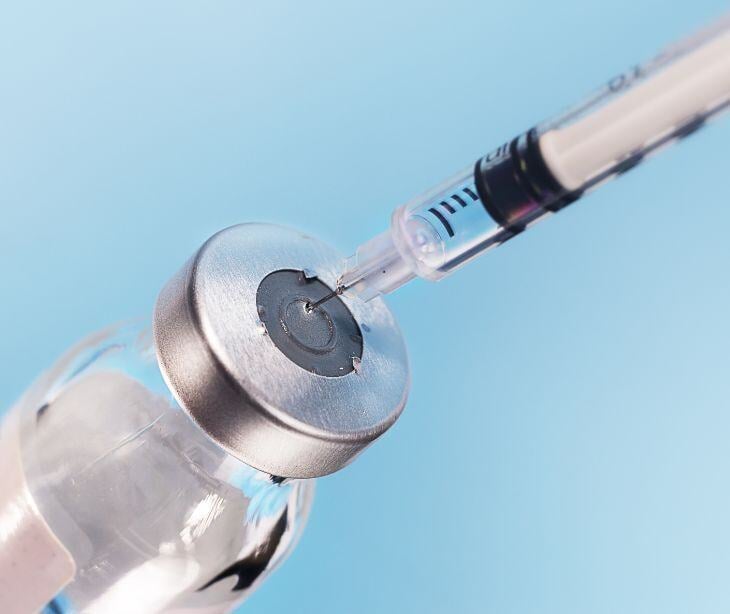
Human papillomavirus (HPV) affects more than 42 million Americans, causing about 36,000 cases of cancer in both men and women each year, according to the CDC's information on HPV statistics. Yet, “vaccination provides safe, effective, and lasting protection” against these infections.
More specifically, the vaccine can prevent more than 90% of HPV-related cancers, including cervical, head and neck, anal, penile, vaginal, and vulvar cancers. Despite more than 15 years of national HPV vaccination efforts, uptake remains below public health targets, particularly among Black/African American adolescents.
As a research study on Developing an mHealth Intervention to Increase HPV Vaccine Confidence Among Black Families notes, “Despite over 15 years of human papillomavirus (HPV) vaccination implementation, uptake remains below national targets.” Nationally, only 61% of adolescents aged 13-17 completed the HPV vaccine series in 2023, compared with 88-89% completion rates for other adolescent vaccines. Furthermore, “Black adolescents have significantly lower completion rates compared to White adolescents.”
Addressing this disparity requires culturally responsive, privacy-preserving, and trust-centered communication strategies. Emerging evidence shows that secure email can deliver neutral, credible, and family-centered information about HPV vaccination.
Why HPV vaccine promotion requires trusted communication
HPV vaccination hesitancy is driven by multilevel factors, like safety concerns, medical mistrust, social norms, and prior experiences with health systems.
As the study explains, “Vaccine hesitancy, or an uncertain attitude and reluctance toward vaccination, is a well-documented barrier to HPV vaccination.” Among Black families specifically, hesitancy is often shaped by “concerns about the vaccine’s safety, necessity, and efficacy,” as well as broader structural and historical factors.
Black parents may also be handling competing sources of information, family input, and misinformation within social networks. The authors note that “medical mistrust and previous negative health care experiences also affect hesitancy and refusals among Black families.” In this context, how information is delivered and whether it respects autonomy, privacy, and decision-making time matters.
Read also: How HIPAA compliant emails support patient autonomy
The ubiquity of healthcare emails
According to the research study, many parents were already accustomed to receiving health-related messages via text messages, pharmacies, or even inconvenient patient portals. “Most parents (75%) had received SMS reminders for their child’s health care appointments,” and many regularly used patient portals to review visit summaries and test results.
These experiences showed individuals that digital communication was acceptable, expected, and often appreciated. Parents would thus describe appointment notifications as “a welcoming, gentle reminder because sometimes life can happen and you can forget things.”
More specifically, providers can use the ubiquity of email communication to communicate with parents, given its familiar interface and universal accessibility. For example, providers can send out vaccination appointment reminders a few days in advance to help parents remember and plan accordingly. However, when these emails contain individuals’ protected health information (PHI), they must be encrypted during transmission and at rest.
Why email must be HIPAA compliant
Email communications can have a valuable role in HPV vaccine communication. In the research study, parents described email as better suited for:
- Detailed explanations
- Record keeping
- Privacy
- Reviewing information at their own pace (asynchronously)
- Sharing information with partners or co-parents
As one parent explained, email allows for “handling detailed information” and offers “more privacy than SMS.” Using HIPAA compliant emails safeguards PHI and upholds federal regulations. It also increases recipient trust when they know that their information is being handled responsibly. Additionally, email provides a written record that can be easily referenced in the future. This can be helpful for reviewing important information or for sharing details with partners or co-parents who may need to be kept in the loop.
Secure email communication is also beneficial for maintaining an organized exchange of information, reducing the risk of miscommunication or misunderstandings. Overall, providers can use HIPAA compliant emails for sharing information with partners or co-parents to streamline communication processes, so all parties are well-informed.
Tips for sending secure HPV vaccination emails
Use fact-based information
To increase HPV vaccine confidence among Black families, HIPAA compliant emails must include neutral, non-persuasive fact-based information, avoiding messages that could be perceived as promotional.
One parent included in the abovementioned research stated, “Just give me the facts, the information without any opinions. And then I can go and follow up on my own.” Another parent expressed discomfort with messaging that felt overly encouraging, stating, “It’s like you’re just trying to butter me up just to get this [vaccine]. Be honest and just say, ‘Hey, we understand that you have some concerns about the side effects.’”
HIPAA compliant email allows providers to send secure messages that include:
- Balanced explanations of HPV vaccine benefits and risks.
- Acknowledgment of concerns.
- Links to external, trusted sources.
- Transparency about what is known and what parents may want to discuss with their pediatrician.
Include verified information
Parents may want to verify information independently and prefer messages that include citations or links. As one parent explained, “It’s best to include a neutral third-party link, so that the recipient can go and look it up for themselves.”
While some parents favored federal sources like the CDC, others preferred:
- The American Academy of Pediatrics (AAP)
- State or local health departments
- Universities and teaching hospitals
- The World Health Organization (WHO)
The study notes that “including links to trustworthy sources was perceived as increasing credibility and helpful for family-centered decision-making.”
HIPAA compliant email allows health organizations to embed these links, allowing parents to explore additional information at their own time, supporting autonomy and informed decision-making.
Support family-centered decision making
HPV vaccination decisions are often made collaboratively. Many parents in the study discussed decisions with spouses, co-parents, or extended family members.
In these cases, HIPAA compliant emails allow parents to:
- Revisit information multiple times
- Forward messages to partners
- Discuss content offline
- Prepare questions for pediatric visits
As the authors stressed, parents wanted information “before the pediatric appointment” so they could feel prepared rather than rushed.
Address medical mistrust
Medical mistrust surfaced repeatedly in the study, particularly in relation to vaccines perceived as “new.” As evidenced by one of the parents stating, “Some people just want to know how long it has been in existence in the USA and even some other parts of the world.”
HIPAA compliant emails can directly address this, offering an explanation of vaccine history, safety monitoring, and long-term use. It also allows organizations to acknowledge mistrust openly, respecting parents’ concerns.
Use respectful and informative communication
Providers must use HIPAA compliant emails to empower parents, recognizing their role as the primary decision-makers for their children’s health and giving them the tools they need to feel confident in those decisions. In the study, parents consistently expressed that they wanted communication about HPV vaccination to support their judgment.
One parent captured this when describing linked information in messages, stating, “You’re putting the power in the parent’s hand.” This is how access to factual resources allows parents to engage actively with health information.
HIPAA compliant email is particularly well-suited to this approach because it enables health systems to share more complete explanations about HPV vaccination while respecting privacy and personal boundaries. Parents wanted time and space to process information before appointments and valued messages that helped them prepare for conversations with their child’s pediatrician. As one parent noted, “It’s okay to speak up and ask questions so you understand what the pediatrician is recommending,” encouraging dialogue.
Empowerment also involves acknowledging uncertainty and addressing concerns honestly. Several parents preferred messages that validated fears instead of dismissing them. One participant explained, “Be honest and just say, ‘Hey, we understand that you have some concerns about the side effects.’ And then just address some of those side effects or give links to those side effects.”
Creating empowering emails supports family-centered decision-making. Parents described researching vaccines and involving their children in age-appropriate discussions about why vaccination matters. One parent shared, “If they have questions on what it’s for, I usually do some research and have them read what I found.” When delivered through secure, HIPAA compliant email, vaccine information can be revisited, shared with co-parents, and discussed at home, reinforcing informed consent.
Combining email with other digital channels
The study suggests that parents preferred using email for education, detail, and documentation, while HIPAA compliant text messaging would be preferred for reminders and brief prompts. As the authors conclude, “Developing the intervention with families highlighted the need for multi-modalities, including informational short-message-service (SMS) and detailed emails with tailored information.”
From a compliance and equity standpoint, HIPAA compliant email provides a scalable way to deliver patient education and patient-centred care.
Related: Personalized patient education, HIPAA, and AI
Implications for public health organizations
Using HIPAA compliant email to promote HPV vaccination among African Americans aligns with what parents explicitly said they want:
- Neutral information
- Time to decide
- Respect for privacy
- Access to trusted sources
- Support for family discussions
Moreover, “Multi-modal interventions providing accurate information tailored to parents’ questions and concerns have the potential to educate and empower parents to protect their children from HPV cancers.”
When email is secure, culturally responsive, and thoughtfully designed, it creates a bridge between public health goals and parental autonomy.
FAQs
Can providers use regular emails for patient communication?
No, regular email services, like Gmail and Outlook, are not secure. Instead, providers must use a HIPAA compliant emailing platform, like Paubox, to safeguard patients' protected health information (PHI).
What makes an email HIPAA compliant?
An email is HIPAA compliant when it meets the HIPAA requirements for protecting sensitive patient information. Therapists must use a HIPAA compliant emailing platform with encryption, access controls, and audit trails to safeguard patients' mental health information and mitigate data breaches.
Additionally, the platform must sign a business associate agreement (BAA) with the healthcare entity to ensure HIPAA compliance.
Are minors protected by HIPAA regulations, and how does this affect communication?
Yes, minors under the age of 18 are protected under HIPAA regulations. While parents or legal guardians usually have the authority to manage their minor child's health information, there are exceptions. In certain cases, minors as young as 12 years old may have the legal capacity to consent to their own treatment or control access to their health information, particularly for sensitive services like reproductive health or mental health treatment.
