


.svg)
.svg)
.svg)
.svg)
.svg)
.svg)
.svg)
.svg)
.svg)
.svg)
.svg)
.svg)
.svg)
.svg)
.svg)
.svg)
.svg)
.svg)
.svg)
.svg)
.svg)

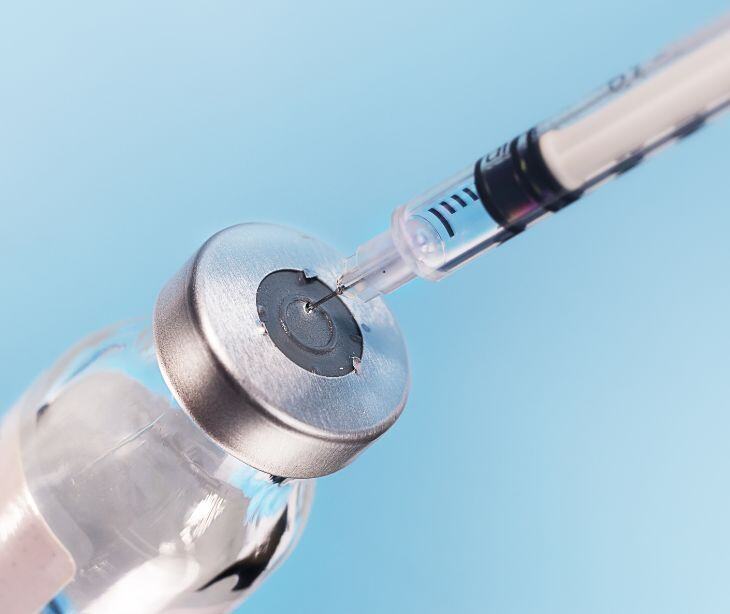
According to NHS UK, “Vaccines are the most effective way to prevent many infectious diseases.” Vaccines:
- “help to protect you and your child from many serious and potentially deadly diseases
- protect other people in your family and community – by helping to stop diseases spreading to people who cannot have vaccines, such as babies too young to be vaccinated and those who are too ill to be vaccinated
- undergo rigorous safety testing before being introduced – they're also constantly monitored for side effects after being introduced
- sometimes cause mild side effects that will not last long – you may feel a bit unwell and have a sore arm for 2 or 3 days
- reduce or even get rid of some diseases – if enough people are vaccinated.”
Promoting vaccines through HIPAA compliant email is an excellent way to improve patient outreach while ensuring that privacy regulations are upheld.
Why HIPAA compliance matters in vaccine promotion
Vaccines are a public health concern, with the World Health Organization (WHO) listing vaccine hesitancy as one of the top 10 global health threats. This illustrates how the promotion of vaccines and addressing barriers to uptake are important public health issues.
Promoting vaccines through email can increase awareness and vaccination rates. However, when sending any communication that contains a patient’s health information, such as vaccination status or medical history, HIPAA compliance is necessary.
Failure to comply with HIPAA can result in penalties, including fines ranging from $141 to $71,164 per breach, and reputational damage.
Common email providers not equipped to meet HIPAA standards may inadvertently expose PHI, putting your organization at risk.
To ensure compliance, you must take steps to secure your communications, protect patient privacy, and adhere to HIPAA guidelines.
Ensuring compliance
Choose a HIPAA compliant email provider
Not all email platforms are built with the security necessary to protect sensitive health data, so HIPAA-regulated entities must choose an email provide that offers encryption, secure login features, and a business associate agreement (BAA).
A HIPAA compliant email provider must offer:
- Automatic encryption
- Secure login features like multi-factor authentication (MFA)
- Access control features like role-based access control (RBAC)
- Audit logging and tracking
- Data loss prevention (DLP)
HIPAA compliant email services, like Paubox, are designed specifically for healthcare use and encrypt emails automatically without requiring patient portals or extra logins.
Read also:
- Features to look for in a HIPAA compliant email service provider
- Top 12 HIPAA compliant email services
Obtain consent before sending emails
According to the Department of Health and Human Services (HHS), “A covered entity must obtain the individual's written authorization for any use or disclosure of protected health information that is not for treatment, payment or health care operations or otherwise permitted or required by the Privacy Rule.” This means that to comply with HIPAA, you must ensure that patients have provided proper consent before you send them any email communication containing healthcare-related information. This is particularly important when sending personalized vaccine reminders or educational content.
Opt-in consent can be collected via forms on your website or during in-person visits. Ensure that patients are informed about the types of communications they will receive and how their data will be used.
Learn more: How to obtain patient consent for email communication
Protecting data during transmission
As of December 27, 2024, the Office for Civil Rights (OCR) under the HHS issued a Notice of Proposed Rulemaking (NPRM) to modify the HIPAA Security Rule to strengthen cybersecurity protections for electronic protected health information (ePHI). Under these updates, HIPAA-regulated entities are required to implement encryption as part of their security plan.
Regular email services don’t provide adequate security, so you it is best to opt for an email service that encrypts messages automatically.
For example, Paubox’s HIPAA compliant email platform ensures that messages are encrypted both in transit and at rest, making it nearly impossible for unauthorized parties to access the content of your emails.
Read also: HHS proposes updated HIPAA security rule
Monitoring and reporting
The HIPAA Security Rule technical safeguards requires HIPAA-regulated entities to “implement hardware, software, and/or procedural mechanisms that record and examine activity in information systems that contain or use electronic protected health information.”
This means that organizations must regularly audit their email practices to ensure they meet HIPAA’s security standards. This includes checking the encryption levels, reviewing consent forms, and ensuring all third-party vendors are compliant.
Additionally, these regulated entities must track their email campaign performance in a way that doesn’t compromise patient privacy. You can analyze open rates and click-through rates without needing to track PHI.
Avoiding risky email practices
It’s easy to inadvertently compromise security if you don’t follow proper email practices or use a service:
- No attachments with PHI: Avoid sending attachments that contain sensitive data, such as vaccination records or patient IDs. If you need to share this information, ensure it’s done through secure, HIPAA compliant platforms like Paubox.
- No sharing of patient data without consent: Never share a patient’s PHI with other parties, such as a marketing agency or email list manager, without ensuring the third-party has signed a BAA and followed HIPAA guidelines. Patient consent must also be obtained.
- Use two-factor authentication (2FA): Ensure that email accounts and any other systems handling PHI are protected with strong security measures, like 2FA.
Paubox: The HIPAA compliant solution
Paubox stands out as a trusted, user-friendly, HIPAA compliant email solution tailored specifically for the healthcare industry. Unlike traditional email providers that require patient portals or additional logins to access secure messages, Paubox delivers fully encrypted emails directly to the recipient’s inbox, just like regular email, while ensuring seamless security. This seamless experience significantly boosts patient engagement, with Paubox reporting email open rates nearly 70% higher than those of traditional secure messaging platforms.
Paubox’s functionality is based on its ability to automatically encrypt every outbound message, both in transit and at rest, without requiring any special actions from the sender or recipient. This eliminates the common usability barriers that hinder communication and compliance in many healthcare settings. It also helps mitigate the risk of human error. For organizations promoting vaccinations, this means that appointment reminders, educational materials, and follow-up messages containing protected health information (PHI) can be sent securely, confidently, and efficiently.
In addition to its encryption features, Paubox provides critical safeguards like two-factor authentication (2FA), spam and phishing protection, and logging and audit capabilities, features that align with HIPAA’s technical and administrative security requirements.
Importantly, Paubox also offers a business associate agreement (BAA), a legal requirement under HIPAA when PHI is handled by a third-party service. This agreement outlines Paubox’s commitment to safeguarding patient data, making it a compliant and accountable partner for healthcare providers.
Furthermore, Paubox integrates with common email platforms like Google Workspace and Microsoft 365, allowing healthcare organizations to maintain their existing email workflows while enhancing them with HIPAA-level security.
FAQs
What is HIPAA compliant email?
HIPAA compliant email ensures the security and privacy of PHI by implementing encryption, secure access, and adherence to the HIPAA Security Rule. It also involves a BAA with email service providers.
Do vaccine-related emails always involve PHI?
General vaccine information doesn’t include PHI and doesn’t require HIPAA compliance. However, personalized reminders or details that reference a patient’s health status are considered PHI.
What happens if my email system is breached?
If a breach involves PHI, you must report it according to HIPAA’s Breach Notification Rule.
