


.svg)
.svg)
.svg)
.svg)
.svg)
.svg)
.svg)
.svg)
.svg)
.svg)
.svg)
.svg)
.svg)
.svg)
.svg)
.svg)
.svg)
.svg)
.svg)
.svg)
.svg)

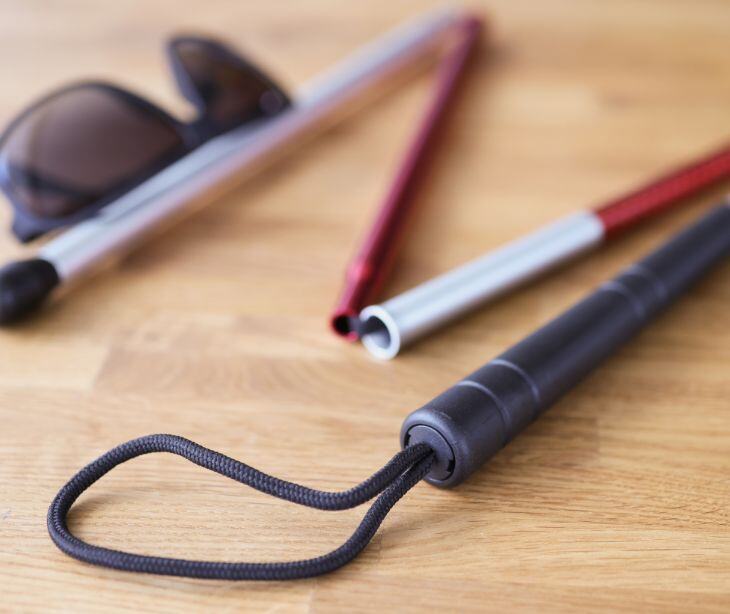
“According to estimates from the 2022 National Health Interview Survey, 50.18 million American Adults age 18 and older reported experiencing some degree of vision loss. Of these, 3.89 million adults have a lot of trouble seeing, even when wearing glasses, and 340,000 cannot see at all. The remaining 45.95 million adults report having a little trouble seeing, even when wearing glasses,” says the American Foundation for the Blind.
Given these statistics, healthcare professionals must be adept at tailoring their communication methods to meet the needs of visually impaired patients. This enhances the patient experience and ensures compliance with HIPAA regulations.
Communication methods
When communicating with visually impaired patients, healthcare professionals can use a variety of methods to ensure that information is both accessible and comprehensible. Here are some effective communication methods:
Verbal communication
- Clear and concise speech: Speak clearly, at a moderate pace, and use simple language to convey information.
- Detailed descriptions: Provide detailed descriptions of procedures, environments, and other relevant information.
- Confirm understanding: Regularly check that the patient understands the information by asking them to repeat or summarize key points.
Assistive technologies
- Screen readers: Ensure electronic documents and patient portals are compatible with screen reader software like JAWS, NVDA, or VoiceOver.
- Text-to-speech devices: Use devices or software that convert written text into spoken words.
- Voice assistants: Use voice-activated assistants like Siri, Alexa, or Google Assistant for interactive communication.
Digital communication
- Accessible websites: Ensure your website and patient portals are compliant with WCAG (Web Content Accessibility Guidelines).
- Secure messaging: Use encrypted email or secure messaging platforms to send sensitive information in accessible formats.
Learn more:
Accessible formats
- Braille: Provide documents and information in Braille for patients who read Braille.
- Large print: Use large print documents for patients with partial vision.
- Audio recordings: Offer audio recordings of important information and instructions.
Tactile methods
- Tactile graphics: Use raised-line drawings or tactile graphics to convey complex visual information.
- Tactile signage: Ensure that signage in healthcare facilities includes Braille and raised print.
See also: Email communication with the visually impaired
Maintaining HIPAA compliance
Maintaining HIPAA compliance when communicating with visually impaired patients involves implementing specific strategies to ensure the confidentiality, integrity, and availability of protected health information (PHI). Here are key steps to follow:
Secure communication channels
- Encryption: Use encrypted email and secure messaging platforms for electronic communication to protect PHI from unauthorized access.
- Secure phone lines: Ensure phone calls are made from secure lines, and confirm the identity of the patient before sharing sensitive information.
See also: HIPAA Compliant Email: The Definitive Guide
Access controls
- Password protection: Ensure that electronic devices are password-protected and that passwords are shared securely with patients.
- Role-based access: Limit access to PHI to authorized personnel only, ensuring that only those who need to know the information have access.
Learn more: Access control systems in healthcare
Confidential communication
- Private settings: Conduct in-person discussions in private areas to prevent eavesdropping.
- Discreet assistance: When guiding or assisting patients, do so discreetly to maintain their privacy.
Staff training
- HIPAA training: Regularly train staff on HIPAA regulations and the importance of maintaining patient confidentiality.
- Accessibility training: Educate staff on how to communicate effectively and securely with visually impaired patients.
Written policies and procedures
- Accessible communication policies: Develop and implement policies specifically for communicating with visually impaired patients, ensuring these policies are in line with HIPAA regulations.
- Regular audits: Conduct regular audits to ensure that all communication methods comply with HIPAA and accessibility standards.
Patient involvement and consent
- Patient preferences: Discuss and document the patient's preferred communication methods and obtain written consent for using these methods.
- Informed consent: Ensure patients understand and consent to the ways their PHI will be communicated and stored.
Incident response plan
- Data breach protocols: Have protocols in place to quickly address and mitigate any breaches of PHI, including notifying affected patients and taking corrective actions.
- Reporting: Ensure incidents are reported in compliance with HIPAA requirements.
Go deeper: The 6 steps of incident response
Regular reviews and updates
- Policy reviews: Regularly review and update communication policies to ensure they remain compliant with the latest HIPAA regulations.
- Technology updates: Keep communication technologies up-to-date to maintain security and accessibility.
FAQs
What is HIPAA, and why is it important in healthcare communication?
HIPAA (Health Insurance Portability and Accountability Act) is a federal law that protects patient health information from being disclosed without the patient's consent or knowledge. It is important in healthcare communication to ensure the confidentiality, integrity, and security of patient data.
Learn more: What is HIPAA?
What should be included in a communication policy for visually impaired patients?
A communication policy should outline the use of accessible formats, secure communication channels, staff training requirements, and procedures for obtaining patient consent and preferences. It should also include protocols for ensuring privacy and confidentiality.
What steps should I take if there is a breach of HIPAA compliance involving a visually impaired patient?
Follow your facility's data breach protocols, which should include notifying affected patients, conducting a thorough investigation, and taking corrective actions to prevent future breaches. Report the incident in compliance with HIPAA requirements.
Learn more: How to respond to a data breach
