


.svg)
.svg)
.svg)
.svg)
.svg)
.svg)
.svg)
.svg)
.svg)
.svg)
.svg)
.svg)
.svg)
.svg)
.svg)
.svg)
.svg)
.svg)
.svg)
.svg)
.svg)

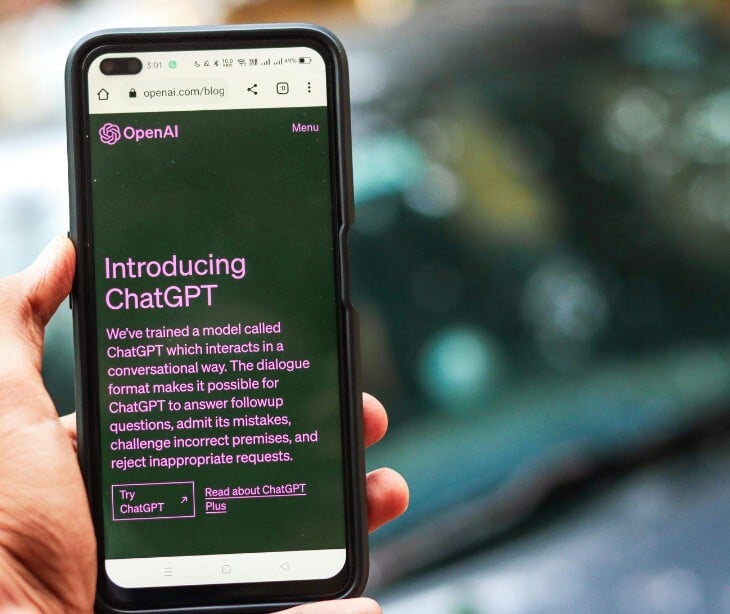
ChatGPT emerged in 2022 as a “conversational AI language model developed by OpenAI,” writes Jianning Li and colleagues in an article titled ChatGPT in healthcare: A taxonomy and systematic review. “It uses deep learning techniques to generate human-like responses to natural language inputs…Currently, the interface is designed for question answering (QA), i.e., ChatGPT responds in texts to the questions/prompts from users. All established or potential applications of ChatGPT in different medical specialties and/or clinical scenarios hinge on the QA feature, distinguished only by how the prompts are formulated.”
ChatGPT is particularly valuable in administrative and compliance-related tasks, such as creating HIPAA compliant email content. Since the model's output is driven entirely by user prompts, healthcare professionals can leverage ChatGPT as a smart assistant to generate email templates, training materials, internal policies, and breach response documentation that align with HIPAA requirements—so long as they craft their prompts carefully and avoid inputting any protected health information (PHI). By understanding how to ask the right questions, users can unlock ChatGPT’s full potential to streamline secure communication workflows.
Navigating HIPAA compliance with ChatGPT
While ChatGPT is a powerful tool for content generation, there are limitations to its use in regulated environments like healthcare. By default, standard versions of ChatGPT are not HIPAA compliant and should not be used to process, store, or transmit protected health information (PHI). However, this doesn’t mean the tool cannot be used by healthcare organizations altogether.
According to David Holt, owner of Holt Law LLC, “Even though the standard versions of ChatGPT aren’t HIPAA compliant, there are still ways for healthcare organizations to use it safely. One way is by only using it with de-identified data—meaning all personal information is removed so it no longer counts as protected health information under HIPAA.”
De-identification is a practical workaround that enables healthcare teams to use ChatGPT for general administrative tasks such as drafting policies, educational content, training modules, and email templates.
Holt also points to the development of specialized AI tools that offer stronger privacy safeguards. “There are special tools out there, like BastionGPT and CompliantGPT, that act as a secure layer around ChatGPT. These tools are built with HIPAA in mind and can sign Business Associate Agreements,” he explains. “Some organizations are also setting up ChatGPT models directly on their own servers, which keeps everything in-house and avoids sending patient data over the internet.”
In other words, organizations that require HIPAA-level protections can explore self-hosted solutions or compliant versions of ChatGPT to ensure full control over sensitive data.
The privacy concerns aren't limited to healthcare. Holt adds that legal professionals also face similar restrictions. “Lawyers like myself have to do a similar workaround to protect private information,” he says, illustrating the broader relevance of AI safety in regulated industries.
For organizations looking for AI solutions that are compliant right out of the box, tools like Hathr AI and Hippocratic AI are emerging as secure, healthcare-specific alternatives. These platforms are designed to meet HIPAA standards natively and may be more appropriate for patient-facing or data-intensive applications.
Still, even standard ChatGPT can be applied to healthcare, if used appropriately. “Finally,” Holt concludes, “even the standard ChatGPT can be useful in situations that don’t involve patient data, like drafting educational materials or helping write policies and templates that can be customized later.”
This makes ChatGPT particularly well-suited for use cases like generating HIPAA compliant email prompts. By keeping queries free from PHI and focusing on policy, procedure, and general communication strategies, healthcare teams can take advantage of AI-powered efficiency without compromising compliance.
Read also: A quick guide to using ChatGPT in a HIPAA compliant way
How ChatGPT can help
ChatGPT can assist in:
- Drafting patient communications without including PHI.
- Generating templates with HIPAA-safe language.
- Writing training material on compliant email practices.
- Assisting with technical explanations for compliance audits.
- Creating outreach content while minimizing regulatory risk.
The prompts you give ChatGPT matter. A well-crafted prompt ensures the AI's response is tailored, relevant, and compliant. Below, we break down sample prompts across five essential areas:
Marketing and patient communication prompts
With ChatGPT, you can generate compliant messaging that informs, reminds, and engages without overstepping boundaries.
Sample prompts
- "Write a HIPAA compliant welcome email for new patients at a dermatology clinic."
- Ensures no PHI is included while giving a friendly introduction to your practice.
- "Generate a monthly newsletter template that follows HIPAA email compliance guidelines."
- Content will focus on general health tips, clinic news, or service updates, excluding patient-specific info.
- "What content is safe to include in a HIPAA compliant promotional email for a pediatric clinic?"
- Encourages educational, non-targeted content like back-to-school wellness tips.
- "Create a series of HIPAA compliant email subject lines for appointment reminders."
- Ensures subject lines are generic and don't expose PHI, e.g., “Reminder: Upcoming Visit at Your Clinic.”
- "Draft an email educating patients on telehealth services while remaining HIPAA compliant."
- Encourages secure platform use without referencing individual treatment or diagnoses.
See also: HIPAA compliant email marketing: What you need to know
Compliance and security prompts
ChatGPT can act as a knowledge base to help draft policy, summarize guidelines, and build awareness across your team.
Sample prompts
- "List the key elements of a HIPAA compliant email system."
- Helps outline encryption, access control, audit trails, business associate agreements, etc.
- "What types of information are considered PHI in emails?"
- Generates a list of identifiers that should never appear in email without safeguards.
- "Write an internal policy on sending HIPAA compliant emails to patients."
- Useful for employee handbooks, SOPs, or compliance documentation.
- "Summarize the HIPAA email encryption requirements for a healthcare provider."
- Offers digestible overviews for IT or compliance staff unfamiliar with encryption standards.
- "Create a checklist for auditing HIPAA compliant email communication."
- Helps internal teams ensure tools, procedures, and staff training meet requirements.
With clear policies and regular audits, facilitated by tools like ChatGPT, healthcare organizations can drastically reduce risk.
Training and staff Use Prompts
One of the biggest threats to HIPAA compliance is human error. In fact, according to an article, titled Human errors and their prevention in healthcare, “Human errors form a significant portion of preventable mishaps in healthcare. Even the most competent clinicians are not immune to it.” Employees often misuse email unintentionally, whether by emailing PHI to the wrong person, not using encryption, or misunderstanding what can be shared. ChatGPT can be used to create engaging training materials and quick-reference guides that reduce these risks.
Sample prompts
- "Write a training email for staff on how to use HIPAA compliant email tools."
- Includes do’s and don’ts, links to secure portals, and consequences of non-compliance.
- "Draft a Q&A email addressing common staff questions about HIPAA compliant email use."
- Provides clarity on tricky questions like “Can I send a lab result via email?”
- "Create a quick reference guide on what staff should and shouldn't send via email under HIPAA."
- Examples of compliant vs. non-compliant messages.
- "Write a sample quiz for staff training on HIPAA compliant email practices."
- 5 to 10 multiple-choice questions for use in onboarding or annual training.
- "Summarize the steps a nurse should take to securely email a patient with lab results."
- Useful for role-based training or one-on-one coaching.
Read also: The importance of training healthcare staff in email best practices
Tool integration and tech support prompts
ChatGPT can be used to generate technical documentation, compare vendors, or assist IT teams in setting up secure systems.
Sample prompts
- "Explain how to integrate Microsoft 365 with a HIPAA compliant email service."
- Covers encryption, access control, audit logs, and configuration best practices.
- "Write an FAQ on using SMTP relay services while staying HIPAA compliant."
- Helps clinics using external systems for appointment reminders or billing emails.
- "List HIPAA compliant email providers suitable for small medical practices."
- Examples: Paubox, Virtru, LuxSci, NeoCertified.
- "Compare the HIPAA compliance features of Paubox, LuxSci, and Virtru."
- Provides feature breakdowns for decision-making.
- "Generate user onboarding steps for setting up HIPAA compliant email with Google Workspace."
- Includes linking to BAA, enabling encryption, and securing admin settings.
Incident response and risk management prompts
When breaches occur, responding swiftly and appropriately minimizes harm and regulatory exposure. ChatGPT can help teams develop incident response templates, breach notifications, and reports.
Sample prompts
- "Draft a patient notification email after an email-based HIPAA breach."
- Follows OCR guidelines for what to include (nature of breach, actions taken, contact info).
- "Write a breach investigation report template for a misdirected email containing PHI."
- Useful for internal documentation or submission to OCR.
- "What steps should a clinic take if a HIPAA email policy is violated?"
- Outlines investigation, documentation, notification, and remediation.
- "Generate a root-cause analysis report for a staff member emailing PHI to the wrong patient."
- Helps identify process gaps or training failures.
- "Create a risk mitigation plan after a HIPAA compliant email system was disabled by ransomware."
- Includes use of backup systems, patient alerts, and legal consultation.
Go deeper: 100+ ChatGPT prompts for healthcare professionals
Best practices for using ChatGPT for HIPAA compliant email
While ChatGPT is not a HIPAA compliant tool for handling PHI, it’s a powerful assistant for content generation, training, and documentation. Here are a few guardrails to follow:
- Never input PHI into ChatGPT: Use placeholders like [Patient Name] or [Clinic Name].
- Use it for templating, not transmitting: Don’t use ChatGPT to actually send emails, only to create drafts.
- Combine AI output with human review: Ensure content aligns with your organization’s policies before use.
- Train it with hypothetical scenarios: Use examples for education, not real case studies.
- Keep outputs in secure environments: Store and share drafts in systems with proper access controls.
Learn more: How do healthcare organizations use ChatGPT?
FAQS
Is ChatGPT HIPAA compliant?
No, the standard version of ChatGPT is not HIPAA compliant and should not be used to process or transmit protected health information (PHI).
What is considered PHI in an email?
Protected health information (PHI) includes any data that can identify an individual and relates to their health, such as:
- Full name
- Email address
- Medical conditions
- Appointment details
- Billing information
- Test results
Even seemingly harmless details may qualify if combined with identifying data.
