


.svg)
.svg)
.svg)
.svg)
.svg)
.svg)
.svg)
.svg)
.svg)
.svg)
.svg)
.svg)
.svg)
.svg)
.svg)
.svg)
.svg)
.svg)
.svg)
.svg)
.svg)

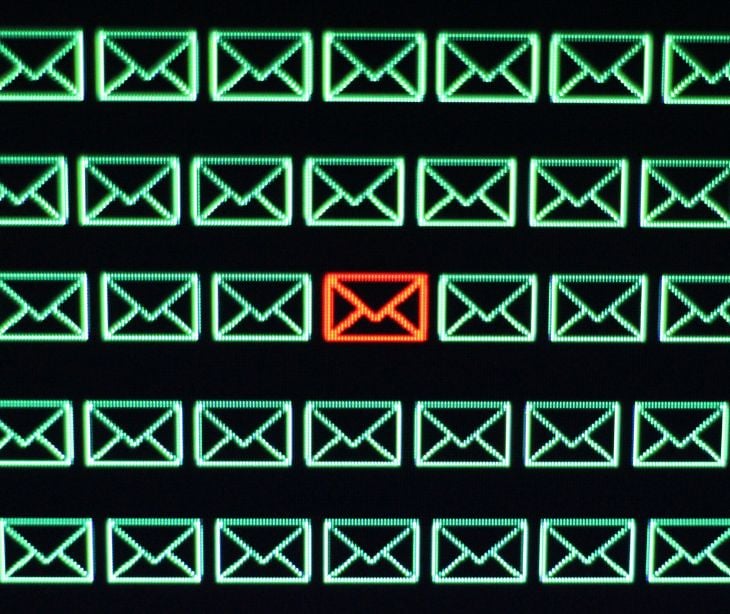
Attackers no longer rely on clumsy spam or obvious malware. Instead, they design messages that look and feel like routine workplace communication, taking advantage of the massive volume of legitimate email that organizations process every day. As one research review Why is phishing still successful? notes, there has been a “dramatic shift from bulk spam emails to targeted email phishing campaigns,” with attackers using “simple, straightforward, masquerading methodology” to impersonate trusted contacts and blend into normal traffic. When thousands of real messages move through SMTP systems, even a small number of carefully crafted fakes can hide in plain sight.
High-traffic environments make the problem worse, as the most dangerous messages can be the ones that look almost legitimate. Subtle tactics like lookalike domains, shortened links, or clean-looking embedded content are often enough to bypass rule-based systems built to catch bulk, obvious threats.
The authors emphasize that attackers increasingly rely on HTTPS, with “nearly three-quarters (74%) of phishing attacks” using SSL/TLS to appear secure, further eroding the value of simple reputation and domain-age checks. This pattern is reinforced in the review, showing that emails styled to resemble real providers or internal users routinely pass signature checks and outbound controls.
What ‘legitimate traffic’ really looks like
Legitimate email traffic follows predictable, everyday patterns that security systems and users have learned to trust. Messages from real senders typically pass basic authentication checks like SPF and DKIM, which confirm that the sending server is authorized to send on behalf of the domain. That verification alone gives both gateways and recipients a strong signal that the message is probably real.
The content itself also looks normal. Legitimate emails usually have clear subject lines, consistent formatting, and natural language that fits routine business or personal communication. There are no strange grammar choices, no implausible requests, and no visual tricks meant to rush or confuse the reader. The tone, structure, and timing all match what people expect from coworkers, vendors, or contacts they already know.
As one large Heliyon study of spam filtering explains, “the menace of spam email is on the increase on yearly basis and is responsible for over 77% of the whole global email traffic,” forcing major providers to rely heavily on machine learning systems that now filter spam and phishing with “about 99.9 percent accuracy,” even though “one out of a thousand messages succeed in evading their email spam filter.”
Enormous volumes of legitimate-looking email establish a trusted baseline, one that attackers exploit and that modern systems, including healthcare-focused platforms like Paubox, are designed to analyze more deeply for subtle signs of abuse.
The tactics that help malicious emails blend in
Social engineering
Attackers lean on authority, urgency, shared context, or offers of help to trigger fast, emotional responses. These tactics do not rely on obvious keywords or malware, which means they often slip past filters built to look for known patterns. The language looks natural, the subject lines sound routine, and the requests feel plausible in the flow of daily work.
Testing and adversarial simulations
Phishers actively tweak and refine their templates to stay ahead of detection tools. They remove red flags, avoid excessive capitalization, limit suspicious links, and use normal business phrasing to reduce the chance of being flagged. In environments where half or more of inbound email is legitimate, those subtle messages disappear into the noise.
Targeted attacks
Spear-phishing emails are customized to look like messages from coworkers, vendors, or institutions the recipient already trusts. Many of these campaigns are malware-free and rely entirely on tricking users into clicking, logging in, or approving requests. That approach now accounts for the majority of successful attacks, proving that blending in, not standing out, is the most effective strategy.
Why reputation scoring fails when infrastructure is ‘clean’
Reputation-based filtering breaks down when attackers send email from a clean, trusted infrastructure. Instead of using shady servers with a history of abuse, many campaigns now run through well-known cloud platforms like Microsoft 365 or Google Workspace. Those services handle enormous volumes of legitimate business email, so their IP addresses and domains carry strong reputations by default. When a malicious message comes from that kind of environment, it starts with a built-in trust advantage.
Attackers authenticate properly, use approved SMTP relays, or abuse OAuth access so their emails pass SPF, DKIM, and DMARC checks. From a technical standpoint, everything looks clean. That forces filters to rely more on content analysis, where social engineering does the work. As one study Creative Persuasion: A Study on Adversarial Behaviors and Strategies in Phishing Attacks found, attackers who consistently used strategies such as “sending notifications, use of authoritative tone, or expressing shared interest” were more successful at persuading recipients to respond.
Urgent requests, authority-based language, and familiar workflows are used to make the message feel legitimate without triggering obvious keyword or malware rules.
When generative AI steps in as the solution
Generative AI defends against modern email threats, especially as signature-based systems struggle to keep up with sophisticated evasion tactics. As we have noted, attackers constantly tweak their methods, which means static filters are always reacting to yesterday’s threats. More adaptive approaches are needed to spot messages that are designed to look legitimate from the start.
Advanced AI models like Paubox help by learning what normal email traffic actually looks like at scale. They build behavioral baselines based on real-world patterns such as tone, structure, sender relationships, and typical workflows. That makes it easier to flag subtle outliers, like a seemingly routine message that carries unusual urgency, odd timing, or a request that does not match past behavior, even when the technical signals appear clean.
As a Frontiers in Artificial Intelligence review on AI-driven phishing defense explains, “traditional rule-based and signature-based detection mechanisms are increasingly ineffective against adaptive adversaries, while machine learning and deep learning approaches provide improved capability to model normal communication behavior and detect anomalous, context-aware phishing attempts that closely resemble legitimate email traffic.”
FAQs
Why is email still the top attack vector for organizations?
Email is widely used, trusted by default, and deeply integrated into daily workflows, making it the easiest and most effective way for attackers to reach employees and exploit human behavior.
What is phishing?
Phishing is a type of attack where emails impersonate trusted senders to trick recipients into clicking malicious links, sharing credentials, or approving fraudulent requests.
What is business email compromise (BEC)?
BEC involves attackers posing as executives, vendors, or finance staff to trick employees into sending money or sensitive information, often without using malware.
