


.svg)
.svg)
.svg)
.svg)
.svg)
.svg)
.svg)
.svg)
.svg)
.svg)
.svg)
.svg)
.svg)
.svg)
.svg)
.svg)
.svg)
.svg)
.svg)
.svg)
.svg)

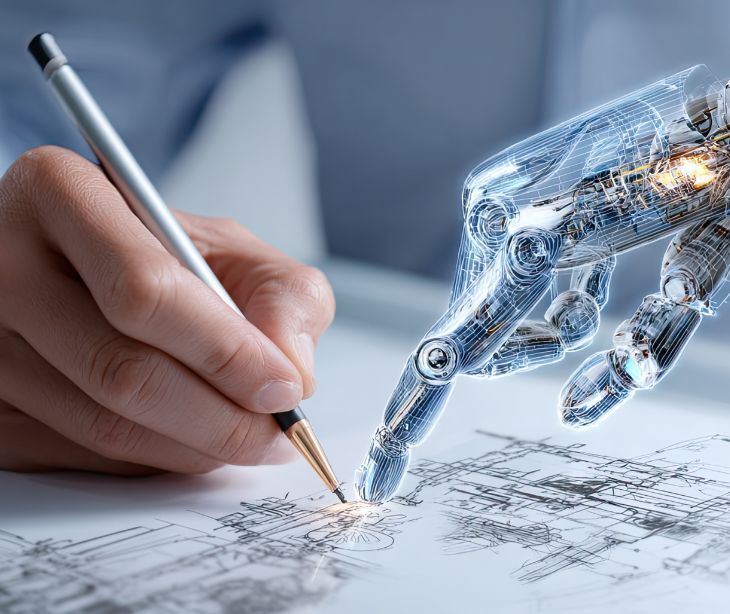
Human-centric AI bridges the gap between machine speed and human judgment. Traditional security operations centers (SOCs) are overwhelmed as analysts face constant alert fatigue, escalating cyber threats, and limited resources. This is because “SOC analysts are unable to keep up with the rapidly increasing volume of alerts even with the aid of specialised SOC tools,” writes Shahroz Tariq, et al., in the study Alert Fatigue in Security Operations Centres: Research Challenges and Opportunities.
While automation promises relief, fully autonomous systems lack the context, intuition, and ethical reasoning that humans bring to cybersecurity.
Human-centered AI offers the best of both worlds: it uses intelligent automation to handle repetitive detection and analysis tasks while keeping people in control of critical decision-making. By amplifying human expertise rather than replacing it, human-centric AI reduces burnout, enhances response speed, and strengthens overall security resilience. In short, the SOCs that will thrive in the future are those that put humans, not just algorithms, at the center of their AI strategy.
Why the SOC needs a new approach
Several long-running problems make SOC work brittle:
- Alert overload and low signal-to-noise: Modern SOCs ingest telemetry from dozens of tools; analysts often spend a majority of their time validating false positives rather than investigating true incidents. As Shahroz Tariq, et al. states, “51% of SOC teams feel overwhelmed by alert volume, with analysts spending over 25% of their time handling false positives.”
- Staffing shortages and burnout: Recruitment and retention are perpetual headaches; organizations report staffing as a top SOC challenge. As Tariq notes in his study, “63% of practitioners experience some level of burnout, with more than 80% saying their workload has increased in the past year.”
- Sophistication of attackers: Attackers are increasingly using automation and AI techniques, forcing defenders to scale their analysis and response capabilities.
AI is a strategic tool, yet its true potential can be realized when it enhances human analysts rather than being treated as a "set it and forget it" solution. Industry surveys and vendor reports indicate an ongoing shift: more teams are experimenting with or implementing AI tools while remaining wary of excessive automation. According to ISC2, approximately 30% of cybersecurity professionals have already integrated AI security tools into their operations, with about another 42% currently testing them. This trend clearly demonstrates that AI is transitioning from optional to essential; however, the rate of adoption remains cautious and deliberate.
What is ‘human-centered AI’ in the SOC?
Human-centered AI means intentionally designing AI systems around human strengths and limitations, maximizing human control, interpretability, and collaboration. In the SOC context, that translates to tools that:
- Prioritize explainability (why an alert was scored high).
- Support interactive workflows (AI suggests next steps; analysts validate and modify).
- Preserve human accountability (clear handoffs, auditable decisions).
- Improve usability—dashboards, summaries, and action-oriented playbooks that fit analyst cognition. The NIST AI Risk Management Framework stresses context-sensitive, human-centered approaches to manage AI risks and build trust in deployed systems.
Ben Shneiderman’s HCAI work in the study Human-Centered Artificial Intelligence: Reliable, Safe & Trustworthy captures this balance: aim for high automation and high human control. The goal is not to exclude humans but to let automation handle scale while humans provide judgment and values.
The benefits of an AI-driven SOC
Organizations that integrate AI-driven co-pilots into their Security Operations Centers (SOCs) gain tangible, measurable advantages. These systems don’t replace human analysts; they enhance their capacity, accuracy, and decision-making, creating a more resilient and efficient cybersecurity operation. According to IBM, businesses adopting AI co-pilots are seeing broad improvements in productivity, responsiveness, and team morale by:
Improved productivity and scalability
AI-driven co-pilots can process large amounts of data far faster than even the most experienced analyst. By automating time-consuming detection, correlation, and triage tasks, they dramatically increase throughput and efficiency. This allows SOCs to monitor complex environments with fewer manual touchpoints, achieving more coverage with fewer human resources.
More time for strategic, high-value work
When repetitive and routine duties are offloaded to AI systems, human analysts can focus on higher-order tasks such as threat hunting, incident forensics, and long-term security strategy. This shift increases operational effectiveness and reduces burnout by keeping analysts engaged in intellectually stimulating work.
Fewer errors and improved accuracy
Manual processes, such as reviewing logs or correlating alerts, are prone to human error, especially under the constant pressure of alert overload. AI co-pilots minimize these mistakes by recognizing subtle, data-driven patterns that may go unnoticed by humans. While their effectiveness depends on the quality of algorithms and training data, AI systems consistently help reduce oversight and prevent breaches caused by missed indicators.
Faster response to threats
AI-driven co-pilots excel at detecting, prioritizing, and responding to threats in real time. Unlike human analysts who may be constrained by working hours or cognitive fatigue, AI systems operate continuously, issuing alerts, executing automated playbooks, and escalating incidents instantly. This leads to significantly faster containment and remediation times.
Mitigating workforce shortages and skills gaps
The cybersecurity industry continues to face a chronic talent shortage, with global estimates placing the shortfall at over 4 million professionals. AI co-pilots help bridge this gap by taking on manual, lower-skill tasks and allowing existing analysts to extend their reach. This ensures greater SOC coverage and resilience even when staffing levels are below ideal or specialized expertise is lacking.
Applications of Human-centered AI in the SOC
Human-centered AI transforms the SOC from a reactive, alert-driven environment into a proactive, intelligent defense system. By combining automation, machine learning, and human expertise, SOC teams can detect, analyze, and respond to threats with greater speed and accuracy, all while keeping analysts in control. Below are the key applications of human-centered AI within modern SOCs.
Automated threat detection and correlation
AI can analyze large volumes of logs, telemetry, and network data in seconds, identifying patterns that would take humans hours to detect. Machine learning algorithms automatically correlate related alerts across multiple systems (endpoint, network, and cloud), eliminating duplication and improving detection accuracy.
For example, an AI engine can link multiple low-severity alerts, such as unusual login times, new process creation, and data exfiltration attempts, to flag a coordinated attack sequence. Analysts then receive a consolidated incident view rather than hundreds of separate alerts, allowing for faster triage and response.
Read also: The move from traditional defences to defensive AI
Anomaly and behavior analysis
Traditional rule-based detection systems often fail to identify subtle, unknown attacks. Human-centered AI introduces behavioral analytics, where models learn the baseline of normal user and system behavior, then detect deviations that may indicate compromise.
This is particularly useful for insider threat detection or advanced persistent threats (APTs). The AI flags suspicious deviations, such as unusual data transfers or access to restricted files, and presents clear, explainable reasoning to human analysts, who can then investigate contextually.
AI-powered incident triage and prioritization
SOC analysts often face thousands of daily alerts, many of which are false positives. AI co-pilots can automatically rank alerts based on risk and relevance, filtering out noise so analysts focus on the incidents that matter most.
Using natural language processing (NLP) and risk scoring, AI tools can evaluate an alert’s context (asset criticality, user role, previous activity) and assign dynamic priority levels. This streamlines workflow management, ensuring that critical incidents are addressed first without overwhelming human operators.
Threat intelligence enrichment
Human-centered AI automates the gathering and correlation of external threat intelligence and links it to active incidents.
Instead of manually searching multiple sources, analysts get context-rich alerts pre-populated with intelligence summaries. AI can also suggest probable attacker tactics and techniques, providing immediate insight into potential next steps and helping analysts plan countermeasures more effectively.
Phishing and email security defense
AI models trained on language patterns, sender metadata, and known phishing campaigns can identify malicious emails that bypass traditional filters. With human-centered oversight, analysts review AI-flagged emails and provide corrective feedback to refine the system’s accuracy over time.
Platforms like Paubox’s Inbound Security exemplify this approach, leveraging behavioral analytics and AI to block advanced phishing threats while maintaining a seamless user experience. This combination of AI-driven detection and human review ensures both precision and adaptability in defending email channels.
See also: HIPAA Compliant Email: The Definitive Guide (2025 Update)
Automated response and playbook execution
AI-driven security orchestration and automation response (SOAR) platforms can take immediate predefined actions when certain conditions are met, such as isolating an endpoint, revoking access credentials, or blocking malicious IP addresses.
In a human-centered implementation, analysts remain in the decision loop: AI may recommend and execute low-risk responses automatically but request human approval for high-impact actions. This balance ensures both speed and safety in containment operations.
Vulnerability management and predictive risk scoring
AI systems can scan asset inventories, patch data, and exploit databases to identify vulnerabilities that pose the highest business risk. Predictive analytics models assess which vulnerabilities are most likely to be exploited based on attacker trends and environmental context.
This allows SOC teams to prioritize remediation where it matters most, shifting from reactive patching to strategic risk reduction. Analysts then focus on validating recommendations and managing exceptions rather than sorting through thousands of CVEs manually.
SOC workflow optimization and analyst support
Human-centered AI also functions as a co-pilot for analysts, streamlining daily workflows. Through conversational interfaces, analysts can ask the AI for summaries, command executions, or quick context lookups (e.g., “Show all alerts related to this host in the past 24 hours”).
Generative AI tools can create incident summaries, investigation reports, or executive dashboards in seconds, saving hours of manual documentation.
Continuous learning and adaptive defense
The SOC is a dynamic environment. Threats evolve, and so must defenses. Human-centered AI systems continuously learn from analyst feedback and new data inputs to improve detection models.
For instance, when analysts mark alerts as false positives or confirm true incidents, these decisions feed back into the AI engine, refining future predictions. Over time, this creates a virtuous cycle of improvement where both humans and machines become more accurate and efficient together.
Related: The convergence of AI and cybersecurity
FAQS
How does human-centered AI differ from traditional automation?
Traditional automation executes predefined rules without context or adaptability. Human-centered AI, on the other hand, learns from data, provides reasoning for its decisions, and adapts to analyst feedback. It assists with judgment-heavy tasks while keeping humans in control of final decisions.
Is human-centered AI compatible with existing SOC tools?
Yes. Many human-centered AI platforms are designed to integrate seamlessly with existing Security Information and Event Management (SIEM) systems, Endpoint Detection and Response (EDR) tools, and other SOC technologies, enhancing their capabilities without requiring complete infrastructure overhauls.
