


.svg)
.svg)
.svg)
.svg)
.svg)
.svg)
.svg)
.svg)
.svg)
.svg)
.svg)
.svg)
.svg)
.svg)
.svg)
.svg)
.svg)
.svg)
.svg)
.svg)
.svg)
.svg)

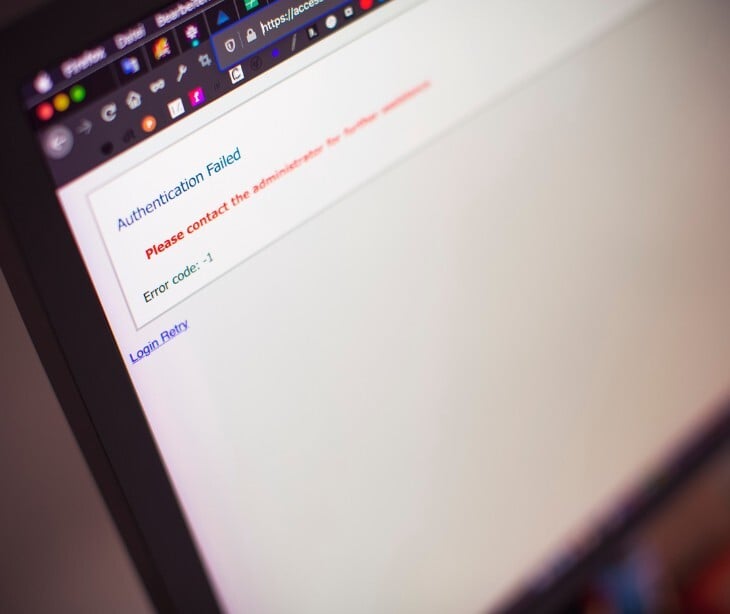
Attackers gain ground the moment certificate hygiene turns from a strict control into a tolerated nuisance. In TLS, the certificate is the thing that tells a client whether the server on the other end is really who it claims to be. When certificates are expired, mismatched to the domain, improperly chained, revoked, or accepted despite trust issues, the authentication layer weakens before any user even reads a message or clicks a link. Server authentication is the central protection against man-in-the-middle and impersonation attacks, and incorrect validation breaks that guarantee.
A server-focused security assessment likewise treats certificate trust issues as critical and places them alongside protocol strength, patching, and HSTS support as core parts of transport security. One large-scale IEEE study of certificates found that 23.5% of collected certificates were already expired when presented by servers, which shows how often bad certificate conditions can become normalized in the wild. Once that happens, defenders face a hard tradeoff: block aggressively and break workflows, or allow degraded trust states to persist. Attackers benefit from either outcome. Permissive behavior gives them more room to impersonate, intercept, or hide inside infrastructure that still appears routine.
What certificate hygiene actually means
At a minimum, it includes making sure a trusted certificate authority issues a certificate, belongs to the correct domain, falls within its valid date range, has the proper key usage and extended key usage, and chains correctly to a trusted root. A Security Journal study notes that a “way for system administrators to protect their users from phishing attacks is by blocking the domains known to host phishing websites. In this approach, users are prevented from accessing any domain that appears on one of the widely used blacklists.” It also includes hostname verification, revocation handling, renewal before expiry, replacement when keys or issuers change, and continuous checking that servers are not silently falling back to outdated SSL or weak TLS settings.
A HIPAA compliant email platform like Paubox, fits into that broader defensive picture by helping healthcare organizations reduce exposure to malicious email traffic while maintaining a more trustworthy communications environment, even though it does not replace the underlying need for strong certificate management.
Work assessing health app servers adds the operational side by treating certificate quality, supported protocol versions, server vulnerabilities, and HSTS support as linked parts of the same security posture. That matters because a valid certificate on a badly configured server is not enough, and a strong TLS stack with a broken certificate is not enough either. Digital certificates are what make authentication in TLS and verification in systems like S/MIME possible. It ties encryption to identification instead of just scrambling data as it is transmitted.
Why certificates matter to attacker resistance
TLS is often described as encryption, but the research is clear that encryption alone is not the whole story. Server authentication is what stops a client from talking securely to the wrong party. The IEEE study found that, “Without server authentication, SSL/TLS connections are insecure against man-in-the-middle attacks.”
That is why certificate validation sits at the center of the TLS handshake. A trusted certificate tells the client that the key on the other end belongs to the intended server, not just any server capable of speaking TLS. To put it another way, certificates make it harder for attackers to get in at two levels. Machine-level defenses employ them to verify endpoints and turn away counterfeits.
Why delivery-first platforms help attackers more than defenders
When a system is optimized mainly to accept, route, and display messages with as little friction as possible, the burden of judging legitimacy shifts from infrastructure to the recipient. That is a bad trade in email environments, where phishing remains common, webmail and software-as-a-service users are major targets, and email continues to be a primary delivery channel for credential theft, malware, and ransomware.
A Frontiers in Psychology study found that when people were asked to detect malicious emails in inboxes containing 20%, 5%, and 1% malicious messages, detection accuracy was lowest when only 1% were malicious. That matters because it suggests a paradox: when automated defenses block most attacks, the few that still get through may be more persuasive because users assume the inbox is mostly safe. The study also notes that vigilance drops over time and points to a study of 621 participants in which individual differences in attentional vigilance predicted performance in distinguishing spam from phishing sites.
A delivery-first paradigm, therefore, benefits attackers more than defenders. It is not because delivery is inherently bad, but because it lets malicious messages travel the same fast path as legitimate ones and leaves the hardest security decision to tired people at the end of the chain.
FAQs
What type of certificate is required for HIPAA compliant email?
HIPAA does not name one mandatory certificate type for email.
What does a TLS certificate do in email security?
A TLS certificate helps verify the identity of the server during the handshake and protects the connection against network attackers when certificate validation is done correctly.
What is the difference between a server certificate and a user certificate?
A server certificate is used to authenticate a mail server or service endpoint in TLS. A user certificate, often an S/MIME certificate, is tied to an individual sender or mailbox for signing and encrypting email content.
