


.svg)
.svg)
.svg)
.svg)
.svg)
.svg)
.svg)
.svg)
.svg)
.svg)
.svg)
.svg)
.svg)
.svg)
.svg)
.svg)
.svg)
.svg)
.svg)
.svg)
.svg)

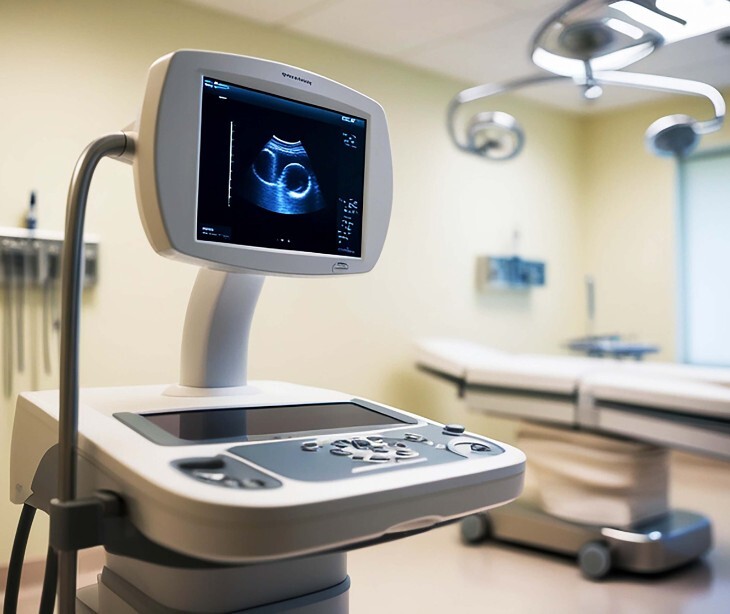
Generative AI models are described as systems that learn the patterns of data well rough to create new material that didn’t exist before. They don't copy a specific example; instead, they learn from many examples and then produce something new. Common approaches include GANs, VAEs, diffusion models, and large language models.
These especially become useful in the production of synthetic medical data that behaves like actual data. That makes them useful for researchers when experimenting, especially in the realm of medical image generation or helping draft clear messaging.
One study, ‘Generative AI in Medical Practice: In-Depth Exploration of Privacy and Security Challenges, ’ notes that “Generative AI, including models such as generative adversarial networks and large language models, shows promise in transforming medical diagnostics, research, treatment planning, and patient care. However, these data-intensive systems pose new threats to protected health information.”
The biggest value is privacy preserving diagnostics and the way they generate synthetic patient records or health data like the ones seen in the systems behind medGAN or PATE-GAN. These synthetic datasets keep the statistical value of the original information but remove the details that make real patient data identifiable.
The value of privacy preserving diagnostics
Privacy preserving diagnostics refers to secure two party computation (STC), oblivious transfer (OT), federated learning (FL), and partially homomorphic cryptosystems (PHC) that allow for medical diagnosis and collaborative systems without revealing raw patient data or proprietary diagnostic models between patients, healthcare institutions, or cloud servers.
A foundational idea in this space appears in ‘Privacy-Preserving Self-Helped Medical Diagnosis Scheme Based on Secure Two-Party Computation in Wireless Sensor Networks’ that notes, “With the continuing growth of wireless sensor networks in pervasive medical care, people pay more and more attention to privacy in medical monitoring, diagnosis, treatment, and patient care… In order to balance this contradiction, in this paper we design a privacy-preserving self-helped medical diagnosis scheme based on secure two-party computation in wireless sensor networks so that patients can privately diagnose themselves… without revealing patients' health information and doctors' diagnostic skill.”
These methods process anonymized inputs to generate diagnostic reports or classifications. They can also lend assistance in reidentification and data breach efforts that assist with complying with HIPAA.
What generative models bring to healthcare diagnostics
Generative AI models give healthcare diagnostics a way to work with data that would normally be hard to find or too limited. They can create high-quality synthetic data through things like GANs, diffusion models, and VAEs, and that helps fill gaps in real datasets. It becomes useful in areas like Alzheimer’s progression, tumor detection, or retinopathy screening, especially when the real samples are scarce or imbalanced. A meta-analysis, ‘A systematic review and meta-analysis of diagnostic performance comparison between generative AI and physicians’ even reports pooled accuracies around 52.1%, which is basically in the same range as non-expert physicians.
They also help with fairness problems that show up in places like histopathology, radiology, and dermatology. When a model is trained mostly on one group and barely on another, accuracy can slip fast under any distribution shift. Synthetic samples can smooth out some of those gaps without hurting the groups that were already performing well. It usually shows up as improvements in balanced accuracy, better sensitivity for high-risk cases, and stronger out-of-distribution performance overall.
In personalized medicine, they can generate virtual patient cohorts or simulate disease trajectories from retinal scans or EHR data. These scans let researchers or clinicians run treatment predictions for rare conditions or long-term cardiovascular risks even when the real-world records barely exist. It also works alongside privacy-safe data augmentation for CNN-based lesion detection or low-dose CT tasks.
Synthetic data as a privacy shield
What is synthetic medical data
Synthetic medical data is basically the kind of data that gets generated through models instead of being taken directly from patients. It can be described as artificially created datasets that use things like statistical models, rule-based methods, GANs, VAEs, or even Bayesian networks to recreate the same patterns, structures, and distributions you’d normally see in real patient records.
The definition lines up with how the FDA explains it according to ‘Synthetic Data in Healthcare and Drug Development: Definitions, Regulatory Frameworks, Issues,’ noting that “Data that have been created artificially (e.g., through statistical modeling, computer simulation) so that new values and/or data elements are generated. Generally, synthetic data are intended to represent the structure, properties, and relationships seen in actual patient data, except that they do not contain any real or specific information about individuals.”
The goal is to reflect how the real data behaves without pulling in anything that could identify an actual person. People usually group it into fully synthetic data, where everything is generated from scratch, partially synthetic data, where only the sensitive parts get replaced, and hybrid setups that mix the two.
How synthetic medical data support diagnostics
Multiple literature discussions also note the word synthetic itself gets used in different ways. Some papers use it to talk about artificial datasets built by generative models, while others apply it to things like external control arms in trials that still rely on actual observed patient data.
That confusion is why recent reviews started to draw a clearer line between these categories. The above mentioned study points out that “the differentiation between data derived from observed (‘true’ or ‘real’) sources and artificial data obtained using process-driven and/or (data-driven) algorithmic processes is emerging as a critical consideration in clinical research and regulatory discourse.”
How privacy preserving diagnostics contribute to data privacy
Techniques like partially homomorphic cryptosystems, secure two-party computation, oblivious transfer, and federated learning let models run disease-classification tasks or physiological-signal analyses while everything sensitive stays local. Instead of shipping full patient records, systems only move encrypted parameters or aggregated updates, so the data never leaves the servers where it originated. It lowers the chances of a breach or re-identification event because even in a worst-case scenario, the information being exchanged doesn’t carry personal identifiers.
In federated setups, hospitals train a shared model without ever merging datasets. It lines up with HIPAA because it follows the idea of data minimization, and it cuts the exposure surface significantly. In the study ‘A privacy-preserving expert system for collaborative medical diagnosis across multiple institutions using federated learning’ some results even show practical gains, like a federated learning approach paired with residual deep belief networks reaching about 10% higher accuracy with 30% less computational overhead on datasets like Dermatology UCI. That allows real-time monitoring without pushing everything into a single central database.
By encrypting or pseudonymizing the inputs, these workflows keep outside parties from seeing raw data and help protect against inference attacks during AI training or diagnostic runs.
See also: HIPAA Compliant Email: The Definitive Guide (2025 Update)
FAQs
Can generative models leak patient information?
They can if not trained correctly. Models that memorize rare cases or specific outliers might output something too close to a real patient.
Do generative models replace real clinical data?
Not fully.
Why are synthetic datasets considered safer under HIPAA?
Because they remove direct links to real patients. If a model generates artificial records from learned patterns, there’s no raw PHI inside, which reduces re-identification risks and makes data minimization easier to meet.
