


.svg)
.svg)
.svg)
.svg)
.svg)
.svg)
.svg)
.svg)
.svg)
.svg)
.svg)
.svg)
.svg)
.svg)
.svg)
.svg)
.svg)
.svg)
.svg)
.svg)
.svg)
.svg)

In healthcare, trust, encryption, and availability all depend on systems being able to accurately verify identity and maintain secure connections. Email is even more dangerous because messages can go through multiple servers and devices before they arrive at the person who needs them. As one Open Medicine study puts it, “There are three loci at which someone could intercept and potentially read the clinic notes: the sender’s computer; any of the mail servers that relayed the email; and the recipient’s computer. Even if one demands that the sender and the recipient be responsible for securing access to their computers, copies of the email are generated at each of the servers; confidentiality could be breached at any one of them.”
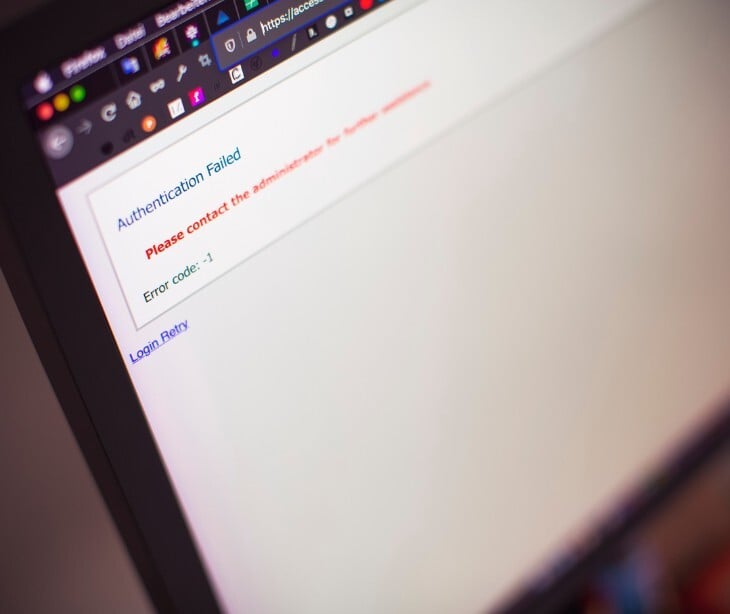
If the transmission is not effectively secured, sensitive information could be exposed at multiple points. Digital certificates make safe email feasible by connecting a person's identity to a cryptographic key and letting computers check who they are talking to. That layer of trust stops working when a certificate runs out. Users may have to deal with delays and uncertainty if secure connections fail, portals stop working, or downloads break. Certificate problems can also make it harder to get help, stop people from starting work or training, and make them choose less secure solutions.
One expired certificate can hurt privacy, availability, workflow continuity, and trust in the system all at once. Healthcare companies need communication technologies that work all the time and are safe, especially when they are dealing with protected health information (PHI). So, expired certificates are more than just a simple mistake by the administration.
What a certificate actually does
A certificate lets a system check someone's identity before sharing information. A digital certificate links an email address to a public key in secure email. It lets the proper person read the messages. During the connection process, certificates do something similar in TLS. The server shows its certificate, and the receiving system checks to see if it is safe. Only then does the encrypted session continue.
That is where Paubox fits in. Secure HIPAA compliant email only works as intended when the trust layer underneath it is sound, so certificate validation is part of what allows platforms like Paubox to support encrypted communication without adding friction for users.
The trust check matters in practice, as expressed in the study Server-Focused Security Assessment of Mobile Health Apps for Popular Mobile Platforms, which cross 60 mHealth apps and 291 functional backend servers, 15.1% of those servers received below-A TLS ratings, 23% of apps used at least one functional backend with certificate validation issues, and 33% used at least one entirely unsecured connection.
While the process sounds easy, the certificate will only work if a few conditions are true. The certificate must be for the right domain, be valid for the right amount of time, link back to a trustworthy certificate authority, and not have been revoked. Certificates are not merely files on a server that are technical. Encryption is not very useful without that confidence because the system cannot be sure who is on the other end of the connection.
What it means when a certificate expires
A certificate is no longer trustworthy after its expiration date. A certificate is no longer valid as proof of identity beyond the termination date. A BMJ Open study notes, “The certificates expired unexpectedly, causing the test portals to become temporarily unavailable.” A secure system should then stop accepting it until a new certificate has been produced and put in place. Expiration is not merely a concern with dates. It is the point at which a link that was once trusted can no longer be trusted.
Paubox’s Healthcare’s email security certificate crisis report shows how often that breakdown happens in practice: in a sample of 803,378 unique outbound email relays, 30,744 certificate failures were identified, with roughly 4% of connections going to servers with unverifiable certificates, including expired or self-signed ones. Paubox says that could translate to up to 19 million PHI-bearing email addresses at risk.
These additional risks may lead to warning messages, connections that fail to work, downloads that do not work, portals that are not available, communication that is delayed, or systems that start to act less reliably again. In healthcare settings, this can quickly become an operational issue because people rely on those technologies to send information, access records, and keep workflows going.
Why expired certificates are more dangerous than they seem to healthcare email
Expired certificates are more hazardous than they seem at first because the damage goes beyond just seeing an error message. Healthcare emails often have patient IDs, clinical information, billing information, scheduling information, and other sensitive information that is sent between companies. Secure email is supposed to lower that risk, but it only works if the trust layer beneath it is still present.
A journal article from the Annual Symposium Proceedings Archives notes, “A breach of security at a node can propagate to other nodes and compromise security over a large segment of the network.” The usual means to check identity fails to function anymore, which makes the encrypted connection less dependable or perhaps unusable. It is also simple to overlook problems like that. People might not grasp the warning, systems might fail in ways that aren't clear, and teams might think encryption is in place when it is not. The hidden nature is what makes certifications that have expired so dangerous. Healthcare communication does not often happen in a single, closed space.
Providers, business partners, vendors, insurers, labs, and pharmacies all send and receive messages. A trust breach in one element of the chain can have an effect on more than one company. When trust checks fail, attackers also profit since it is easier to impersonate someone or intercept their communications when systems do not adequately confirm identity. So, expired certificates are more than simply bothersome technical remnants. They make silent gaps in the controls that make a secure healthcare email useful.
FAQs
Is TLS the same as SSL?
No. TLS is the modern successor to SSL. People still say SSL out of habit, but current secure connections use TLS, not the older SSL protocols.
Why does TLS matter for email and web traffic?
TLS protects sensitive data while it moves across untrusted networks such as the internet. NIST notes that TLS is widely used for email, secure web browsing, instant messaging, and similar applications where transmitted data needs protection.
What is the TLS handshake?
The TLS handshake is the setup phase where the client and server agree on how to communicate securely. During that process, they negotiate security settings, authenticate the server, and establish the cryptographic keys used for the session.
