


.svg)
.svg)
.svg)
.svg)
.svg)
.svg)
.svg)
.svg)
.svg)
.svg)
.svg)
.svg)
.svg)
.svg)
.svg)
.svg)
.svg)
.svg)
.svg)
.svg)
.svg)

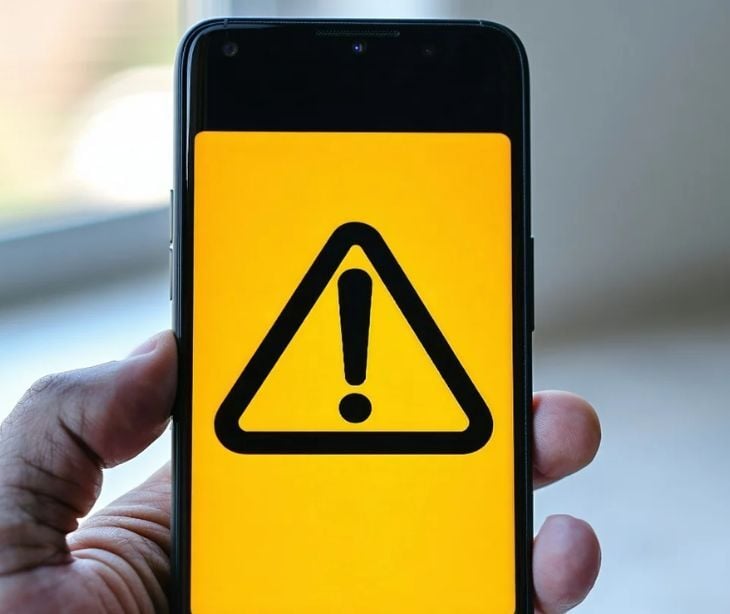
Minnesota's state legislature passed the nation's first bill requiring mental health warning labels on social media platforms, with implementation set for July 2026 if Governor Tim Walz signs the legislation.
What happened
On Monday, June 9, Minnesota became the first state legislature to pass House Bill 2, a "social media warning label" bill. The legislation requires social media platforms to display a "conspicuous mental health warning label" each time a user accesses the platform. The warning must remain visible until the user exits the platform or acknowledges the warning and chooses to proceed. The bill prohibits platforms from placing warnings solely in terms and conditions, obscuring them with extraneous information, or allowing users to permanently disable them. If Governor Tim Walz signs the bill, the requirements take effect on July 1, 2026.
Going deeper
The bill applies to platforms defined under existing Minnesota law as "an electronic medium, including a browser-based or application-based interactive computer service, Internet website, telephone network, or data network, that allows an account holder to create, share, and view user-generated content for a substantial purpose of social interaction, sharing user-generated content, or personal networking." The definition excludes cloud computing, email, Internet service providers, telecommunications carriers, streaming services, video games, and e-commerce platforms. Communications services like texting only receive exceptions when provided by businesses to employees or clients for business purposes.
Required warning labels must inform users of potential negative mental health impacts and provide access to mental health resources, including the website and phone number for national suicide prevention and mental health crisis hotlines like the 988 Suicide and Crisis Lifeline. The Minnesota Commissioner of Health, consulting with the Commissioner of Commerce, will develop and regularly update evidence-based guidelines for warnings based on current mental health research. The Attorney General will enforce these requirements.
What was said
Bridgette Norring, whose 19-year-old son Devin died five years ago after purchasing a fentanyl-laced pill over Snapchat, expressed support for the legislation. "He was just such a bright ray of sun in our family," Norring said about her son, who had a quick wit and loved making music and playing football. When told the bill passed, she said, "I cried, because this is a huge huge win for parents."
Erich Mische, CEO of SAVE, a Bloomington-based nonprofit dedicated to suicide prevention for 36 years, highlighted the broader dangers social media poses to young people. "We are seeing kids being sextorted, we are seeing kids being sex trafficked, kids that are being bullied, kids that are buying illegal drugs on social media platforms," Mische said. He described the new law as "life-changing and life-saving."
Mische explained that warnings will appear on all popular social media platforms, with the exact language still to be determined. "What we're hoping we will see is there will be messages that tell you that here are some of the harms that you will find on these particular platforms, so that the users can be clearly aware of the risks that they face when they enter that site," he said.
Despite the victory, Mische anticipates continued resistance from social media companies. "I have no doubt that they will likely do their best to try to stop this from being implemented and we welcome that fight," he said.
Why it matters
This legislation represents the first state-level attempt to directly address the documented connection between social media use and mental health concerns through mandatory user warnings. Minnesota's approach creates a regulatory precedent that could influence other states to adopt similar measures, potentially establishing a new standard for platform accountability regarding user mental health. The timing requirement for warnings to appear with each platform access, rather than as dismissible pop-ups, signals a more aggressive regulatory stance than previous legislative approaches that relied primarily on platform self-regulation or parental controls.
FAQs
When will the warning label requirements take effect if the bill is signed into law?
They are scheduled to take effect on July 1, 2026.
Who is responsible for creating and updating the mental health warning guidelines?
The Minnesota Commissioner of Health, in consultation with the Commissioner of Commerce, will create and regularly update the guidelines.
What kinds of resources must be included in the warning labels?
Resources must include contact information for national suicide prevention and mental health crisis hotlines, such as the 988 Suicide and Crisis Lifeline.
Can users permanently turn off the mental health warnings?
No, the law prohibits platforms from allowing users to permanently disable the warnings.
Will the warning be easy to ignore or hidden in fine print?
No, it must be conspicuous and cannot be obscured or buried in terms and conditions.
