


.svg)
.svg)
.svg)
.svg)
.svg)
.svg)
.svg)
.svg)
.svg)
.svg)
.svg)
.svg)
.svg)
.svg)
.svg)
.svg)
.svg)
.svg)
.svg)
.svg)
.svg)

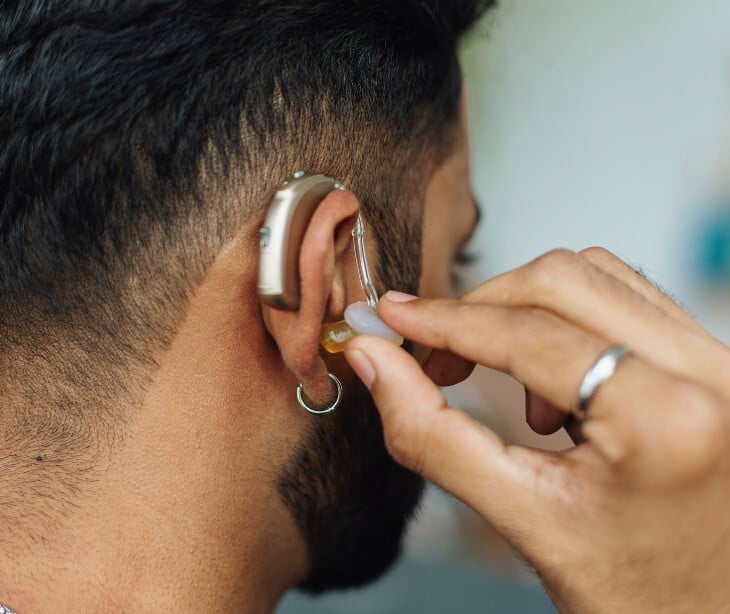
According to the Centers for Medicare & Medicaid Services (CMS), "Approximately 15 percent of American adults (37.5 million) have reported some level of hearing loss." This population faces obstacles when navigating the healthcare system, as noted in the National Academies report, Hearing Health Care for Adults: Priorities for Improving Access and Affordability, which states that "deaf and hard of hearing patients face unique obstacles when navigating the healthcare system."
Unfortunately, as highlighted in Ensuring full participation of people with disabilities in an era of telehealth, "Concerns are rarely expressed, however, about people with disabilities, a population often absent from frameworks focused on health equity and the digital divide." This oversight is concerning given the barriers that already exist in healthcare communication for this population.
Traditional communication methods, such as phone calls for appointment scheduling, prescription refills, or follow-up care, can be inaccessible or inadequate. These patients often rely on sign language interpreters, written communication, or assistive technologies, but these accommodations aren't always readily available or practically feasible for routine healthcare interactions.
The communication barriers extend beyond simple inconvenience. According to CMS, "Communication barriers associated with hearing loss or deafness are linked to poorer health status. People who are deaf or hard of hearing are also more likely than hearing patients to report dissatisfaction with physician-patient communication and less likely to seek out care." When patients cannot easily communicate with their healthcare providers, it can lead to delayed care, misunderstandings about treatment plans, missed appointments, and ultimately, poorer health outcomes.
More critically, CMS emphasizes that "poor communication between patients who are deaf or hard of hearing and hearing clinicians can lead to misdiagnoses, unnecessary transfers, mistreatment, poor assessments, and unintentional harm with negative consequences." The National Academies report emphasizes that "The Americans with Disabilities Act (ADA) requires healthcare providers to ensure effective communication with patients who have disabilities, making accessible communication not just a best practice, but a legal requirement."
Read also: HIPAA compliance when communicating with patients with disabilities
The role of HIPAA compliant email
HIPAA compliant email systems provide a secure digital communication platform that protects patient health information while enabling accessible interactions. These systems encrypt sensitive data, maintain audit trails, and ensure that protected health information (PHI) is transmitted and stored according to federal regulations.
For deaf and hard-of-hearing patients, HIPAA compliant email offers advantages over traditional communication methods. Written communication eliminates the barriers associated with auditory-based interactions, allowing patients to read, process, and respond to healthcare information at their own pace. This communication model is beneficial for patients who may need additional time to formulate questions or understand medical information.
The research on telehealth accessibility supports this approach, noting that healthcare systems should provide "multiple available modes of communication to allow patients to select the mode that is most accessible to them (eg, ability to send voice-based messages through patient portals and text-based messages during a telemedicine encounter)." HIPAA compliant email represents one such accessible communication mode that can be effective for deaf and hard-of-hearing patients.
The importance of written communication is further validated by research findings, in the article Hearing Health Care for Adults: Priorities for Improving Access and Affordability, that suggest "providing a written summary of the discussion may also be helpful since an individual's hearing loss can affect communication during the office visit." This recommendation shows how HIPAA compliant email systems provide the documentation and clarity that deaf and hard-of-hearing patients need.
However, it's important to note that according to CMS, the effectiveness of written communication depends on context: "Writing notes may be effective when a person is scheduling an appointment but is not likely to be effective for discussing a medical diagnosis with a doctor, reviewing the risks and benefits of surgery, or giving consent." This shows how HIPAA compliant email serves as a complement to in-person care, particularly for routine communications, follow-ups, and non-urgent medical discussions.
Read also: Combining HIPAA compliant email and assistive technology
Practical benefits for patient care
The implementation of HIPAA compliant email systems creates opportunities for improved patient care and engagement. CMS notes that healthcare organizations should recognize that "each of these points of contact provide an opportunity for staff to make individualized determination of needs by asking patients if they need auxiliary aids and services or accommodations, and if so, what they need." Email communication represents one such accommodation that can be effective across multiple points of contact.
Research on disability and healthcare technology emphasizes that "given the heterogeneity of the disability community, the potential benefits and adverse consequences of the movement to telehealth will be differentially experienced." This recognition of individual differences shows the importance of offering multiple communication options, including HIPAA compliant email, to meet diverse patient needs.
Appointment scheduling becomes more accessible when patients can send requests, receive confirmations, and make changes through written communication. This eliminates the need for phone calls or third-party intermediaries, giving patients direct control over their healthcare scheduling.
Prescription management also becomes more streamlined through secure email communication. Patients can request refills, ask questions about medications, and receive important safety information directly from their healthcare providers. This direct line of communication reduces the risk of medication errors and ensures that patients have accurate information about their prescriptions.
Follow-up care and monitoring can be enhanced through regular email communication. Healthcare providers can send appointment reminders, check in on patient progress, and provide educational materials about health conditions or treatment plans. This ongoing communication helps maintain continuity of care and ensures that patients remain engaged with their healthcare management.
Facilitating better health outcomes
The accessibility provided by HIPAA compliant email systems directly contributes to improved health outcomes for deaf and hard-of-hearing patients. When communication barriers are reduced, patients are more likely to ask questions, report symptoms, and actively participate in their healthcare decisions. Increased engagement leads to better adherence to treatment plans and more timely interventions when health issues arise.
This patient-centered approach aligns with established healthcare quality principles. As the National Academies report notes, "The literature on patient-centered care in various areas of health care is replete with examples of the benefits of listening and responding to patients' concerns, considering patients' specific needs and preferences, and engaging them in shared decision making." HIPAA compliant email systems embody these principles by providing a communication channel that responds to the specific needs of deaf and hard-of-hearing patients.
Emergency and urgent care situations also benefit from accessible communication systems. While email may not be appropriate for immediate emergencies, it provides a channel for urgent but non-emergency communications. Patients can describe symptoms, ask about medication side effects, or seek guidance on whether immediate medical attention is needed.
The documentation provided by email communication also creates a record of patient interactions. This written record can help healthcare providers track patient concerns, monitor treatment progress, and ensure that important information isn't lost between visits. For deaf and hard-of-hearing patients, who may have had previous negative experiences with healthcare communication, this documented record provides reassurance and accountability.
Case studies
Case 1: Doctors Hospital at Renaissance
The situation
In 2017, Doctors Hospital at Renaissance Ltd. (DHR) in Texas faced a Department of Justice investigation following a lawsuit filed by a local deaf couple. The case centered on the hospital's failure to provide sign language interpretive services during their daughter's cancer treatment, which began in 2011. The parents alleged they were unable to effectively communicate with doctors and medical personnel throughout their daughter's treatment, with the mother being forced to rely on family members to translate medical information.
The resolution
The settlement required DHR to:
- Provide appropriate auxiliary aids and services, including qualified interpreters
- Appoint an ADA administrator
- Provide staff training on ADA requirements
- Adopt specific policies and procedures for prompt delivery of auxiliary aids
- Submit to continued monitoring by the Southern District of Texas
Case 2: PeaceHealth Southwest Medical Center
The situation
In 2024, PeaceHealth Southwest Medical Center in Vancouver, Washington, resolved allegations that it violated the ADA by failing to provide a sign language interpreter to a patient who is deaf during her hospitalization from March 20-23, 2020. The patient experienced emotional distress because she could not understand the reason for her hospitalization or the suggested course of treatment.
The resolution
The settlement required PeaceHealth Southwest to:
- Assess communication needs at initial visits for both patients and companions
- Designate staff members as communication services resources available at all times
- Maintain relationships with five different interpreter services
- Keep detailed logs of interpreter requests and complaints
- Provide regular compliance reports to the U.S. Attorney's Office
- Pay $10,000 in civil penalties plus $75,000 to the affected patient
The role of HIPAA compliant email in prevention
These cases demonstrate gaps in healthcare communication that HIPAA compliant email systems could help address as part of an accessibility strategy.
Pre-visit communication
Both cases involved situations where advance communication could have prevented problems. HIPAA compliant email systems enable:
- Scheduling with accommodations: Patients can specify their communication needs when scheduling appointments, ensuring interpreters are arranged in advance.
- Pre-visit information sharing: Healthcare providers can send intake forms, treatment explanations, and procedural information in written format before appointments.
- Care coordination: Complex cases requiring multiple specialists can be coordinated through secure email, ensuring all parties understand the patient's communication needs.
Ongoing care management
The DHR case involved ongoing cancer treatment where consistent communication was needed. HIPAA compliant email supports:
- Treatment plan documentation: Written summaries of treatment plans, medication instructions, and care guidelines.
- Progress monitoring: Regular check-ins about symptoms, side effects, and treatment responses.
- Educational resources: Sharing of relevant health information, support resources, and educational materials about conditions.
Emergency and crisis communication
While the PeaceHealth case involved an emergency hospitalization, HIPAA compliant email can support:
- Post-discharge follow-up: Ensuring patients understand discharge instructions and follow-up care requirements
- Urgent but non-emergency communication: Providing a channel for patients to ask questions about symptoms or treatments without requiring immediate in-person visits
- Crisis prevention: Early identification of problems through regular communication can prevent emergency situations
Read also: HIPAA compliant email
Implementation considerations
Healthcare organizations implementing HIPAA compliant email systems must consider several factors to ensure accessibility and effectiveness. User interface design should be intuitive and accessible, with clear visual indicators and compatibility with assistive technologies. Staff training is important to ensure that healthcare providers understand how to communicate effectively through written channels and are aware of the specific needs of deaf and hard-of-hearing patients.
The research on accessible healthcare technology emphasizes the importance of ensuring that communications use "the ability to receive all communications in plain language". This aligns with CMS guidance that "literacy rates across the deaf community, on average, fall below a seventh-grade reading level, making it important to provide written information in plain language that is easy to understand." This consideration is important when designing email communications and ensuring that messages are accessible to all patients.
Technical infrastructure must support secure encryption, user authentication, and audit capabilities while maintaining system reliability and user-friendly access. Integration with existing electronic health record systems ensures that email communications become part of the patient's comprehensive medical record.
Solutions like Paubox simplify the implementation process by providing seamless, user-friendly HIPAA compliant email that works with existing email systems. Paubox eliminates the need for patient portals or additional login credentials, making secure email communication as simple as sending a regular email. This ease of use is beneficial for deaf and hard-of-hearing patients who may already face technology barriers, as it removes additional complexity from the communication process. Healthcare staff can send secure, encrypted emails directly from their familiar email interface without requiring technical training or workflow changes.
Legal compliance and policy considerations
The implementation of HIPAA compliant email systems for deaf and hard-of-hearing patients is not just a best practice—it's a legal requirement. As noted in Ensuring Full Participation of People with Disabilities in an Era of Telehealth, "All covered entities (ie, health programs and activities that receive federal funding) must ensure accessibility of all programs delivered through electronic and information technology under Section 1557 of the Affordable Care Act."
This legal framework reinforces the importance of providing accessible communication options like HIPAA compliant email as part of healthcare delivery. Healthcare organizations must recognize that accessibility is not optional but rather a requirement for serving all patients effectively.
FAQs
Can deaf and hard-of-hearing patients use HIPAA compliant email to request interpreter services?
Yes, secure email allows patients to specify their communication preferences and request interpreters in advance of appointments.
What happens if a healthcare provider ignores a patient's request for accessible communication?
Failure to accommodate communication needs can violate the ADA and lead to legal action or federal enforcement.
How can patients know if their healthcare provider offers HIPAA compliant email?
Patients should ask their provider or check the provider’s website or patient communication policy for information on secure messaging options.
Can HIPAA compliant email replace all other forms of communication for deaf patients?
No, it complements but does not replace interpreters or in-person discussions, especially for sensitive or complex medical conversations.
