


.svg)
.svg)
.svg)
.svg)
.svg)
.svg)
.svg)
.svg)
.svg)
.svg)
.svg)
.svg)
.svg)
.svg)
.svg)
.svg)
.svg)
.svg)
.svg)
.svg)
.svg)

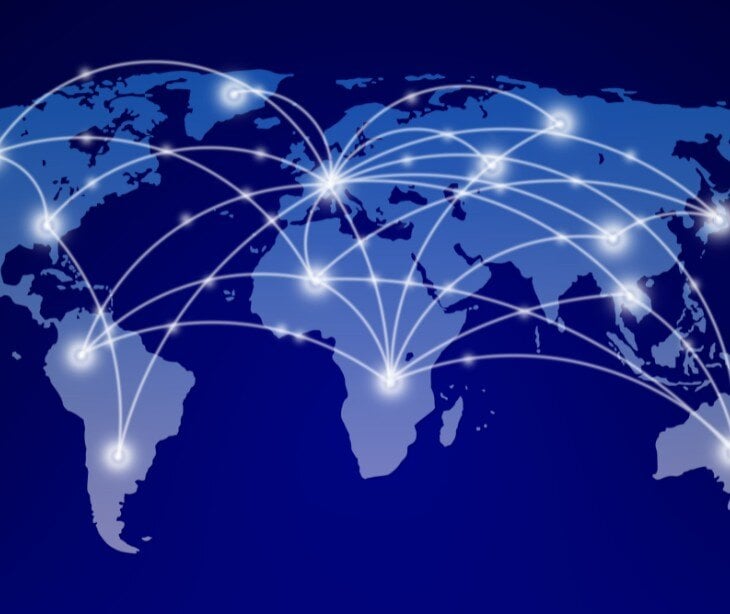
"Economic globalization has been the fundamental driving force behind the overall process of globalization over the last two decades," states a World Health Organization Bulletin article. "It has been characterized both by a dramatic growth in the volume of cross-border flows and by major changes in their nature."
These flows include not just goods and capital but also people, ideas, and information—all of which impact how healthcare is delivered and accessed worldwide. As the WHO notes, "Globalization is one of the key challenges facing health policy-makers and public health practitioners... there is an increasing tension between the new rules, actors and markets that characterize the modern phase of globalization and the ability of countries to protect and promote health."
This tension manifests in various ways across the global healthcare landscape, creating both opportunities and threats to medical practices and systems.
Medical tourism and cross-border care
Medical tourism—patients traveling internationally for healthcare—exemplifies globalization's impact. While this increases options for patients and can reduce costs, it raises concerns for medical practice:
- Continuity of care becomes fragmented when patients receive treatments abroad without adequate follow-up arrangements
- Quality assurance varies widely across jurisdictions, with inconsistent regulatory oversight
- Ethical questions arise when procedures prohibited in patients' home countries (for regulatory or ethical reasons) are sought abroad
- Local healthcare systems in destination countries may prioritize lucrative international patients over domestic needs
The Globalization and risks to health article observes that "Health services can be provided across borders. Examples include a range of telemedicine tools, such as tele-diagnostics and tele-radiology as well as medical consultation through traditional and electronic channels." They also note that "Patients can travel abroad to receive health care or use certain facilities—the UK government recently allowed UK patients to seek treatment in the European Economic Area."
Thailand, India, Mexico, and Turkey have emerged as medical tourism hubs, offering procedures at fractions of Western prices. While this creates economic opportunities, it can also distort healthcare priorities in these countries, directing resources toward profitable elective procedures for foreigners rather than essential services for local populations.
Dr. Zahra Meghani, professor of bioethics at the University of Rhode Island, In her 2011 paper titled "A robust, particularist ethical assessment of medical tourism," states that medical tourism raises important questions about global health equity when healthcare resources in developing countries are diverted to serve wealthy foreigners while local populations may lack access to basic care.
Global migration of healthcare professionals
The global migration of healthcare professionals presents another significant dimension of healthcare globalization. Approximately 1 in 5 physicians practicing in the United States were born and educated abroad. Similar patterns exist in the United Kingdom, Canada, Australia, and other wealthy nations.
This "brain drain" threatens medical systems in source countries, where educational investments yield benefits for wealthier destination countries. Nigeria, for example, has trained many physicians who ultimately practice abroad—approximately half of licensed medical doctors in Nigeria have emigrated, contributing to a widening doctor-to-patient ratio. According to the Nigerian Medical Association, the country now has about 1 doctor per 5,000 people—far below the WHO's recommended ratio of 1 per 600.
When countries lose their healthcare workforce, essential services collapse, undermining public health infrastructure and exacerbating global health inequities. The COVID-19 pandemic displayed these disparities, as countries with depleted healthcare workforces struggled to respond effectively to the crisis.
As the Globalization and risks to health article highlights, this presents an ethical dilemma: "The migration of health personnel raises a complex ethical dilemma. On the one hand, it appears unethical for developed countries, which often depend on foreign-trained physicians to address shortages in rural areas, to attract health professionals from poorer countries. On the other hand, it hardly seems ethical to prevent skilled workers in search of a better life from accepting better opportunities, financial or professional."
The article emphasizes that "As borders disappear, there is an urgent need to develop strategies, at the national and international level, that will minimize the harm and maximize the benefits of the movement of health personnel."
Some countries have attempted to address this issue through retention strategies (improved working conditions and compensation for healthcare workers), bilateral agreements (where destination countries compensate source countries for recruited professionals), or return-of-service requirements (where professionals must serve domestically for a period after completing publicly funded education).
Standardization vs. contextual practice
Globalization has accelerated the international standardization of medical education, clinical guidelines, and practice protocols. Organizations like the World Federation for Medical Education and accrediting bodies increasingly promote unified standards for medical training and practice.
While standardization promotes evidence-based care and quality assurance, it can threaten medical practices that respond to local needs, resources, and cultural values. A study published in BMJ Global Health discusses how international regulators often impose standards that may not align with local contexts, potentially undermining indigenous medical practices and educational systems that have evolved to address specific population needs.
Western medical practices often dominate these standardization efforts, potentially destroying traditional medicine systems with centuries of accumulated knowledge. When international standards are imposed without adaptation to local contexts, they may prove impractical or culturally insensitive.
For instance, psychological treatment protocols developed in individualistic Western societies may require modification to be effective in collectivist cultures. Similarly, clinical guidelines that assume access to advanced diagnostic technologies may be impractical in resource-limited settings.
The World Health Organization (WHO) recognized this challenge and convened the first Traditional Medicine Global Summit in 2023. The summit aimed to mobilize political commitment and evidence-based action on traditional medicine, acknowledging its role in addressing health challenges and driving progress in global health. WHO Director-General Dr. Tedros Adhanom Ghebreyesus stated that "Traditional, complementary, and integrative health is rooted in the knowledge and resources of communities. For millions of people around the world, it is their first stop for health and well-being, and an integral part of their health system."
Global health governance and national sovereignty
The COVID-19 pandemic displayed tensions between global health governance and national sovereignty. International organizations like the World Health Organization provide essential coordination for transnational health threats, but their effectiveness depends on voluntary cooperation from sovereign states.
During the pandemic, this tension manifested in various ways:
- Inconsistent implementation of WHO recommendations across countries
- Nationalistic approaches to vaccine and medical supply acquisition
- Debates over the International Health Regulations' scope and enforcement
- Political polarization regarding global health governance
As the Globalization and risks to health article maintains, "International organizations can have an important role in minimizing such risks through regulations, policy recommendations, advocacy and promoting dialogue among interested parties." However, the effectiveness of these organizations ultimately depends on political will and international cooperation.
Global health inequities and access to care
Globalization has simultaneously expanded and constrained access to healthcare across borders. While international trade agreements have facilitated the spread of medical technologies and pharmaceuticals, intellectual property protections can limit access to these innovations in low-resource settings.
As noted in the Globalization and risks to health article, "WTO's agreement on Trade Related Aspects of Intellectual Property Rights threatens to limit and undermine access to new medicines, especially to poor populations living in the developing world." The article further emphasizes that "if patent protection leads to prohibitively priced drugs, it undermines access to new medicines among the most vulnerable populations."
The HIV/AIDS crisis illustrated this tension, as patents initially prevented affordable access to life-saving antiretroviral medications in developing countries. Only after significant advocacy and legal challenges did pharmaceutical companies agree to licensing arrangements that improved access.
Similarly, during the COVID-19 pandemic, debates over vaccine patents highlighted ongoing tensions between intellectual property rights and global health equity. While some argued that patent waivers would expand manufacturing capacity and improve vaccine access, others contended that intellectual property protections incentivize innovation and that production constraints extended beyond patent issues.
Beyond pharmaceuticals, globalization impacts health through various pathways, including:
- Changing dietary patterns: The WHO notes that "The spread of universal brand names of popular beverages and fast foods has been especially rapid in the developing world during the past two or three decades and has contributed to the global epidemic of obesity by replacing traditional diets with fat- and calorie-rich foods."
- Environmental health challenges: Globalized production networks can shift pollution-intensive industries to regions with weaker environmental regulations, creating localized health hazards.
- Health system inequities: Global market forces and structural adjustment policies have sometimes undermined public health systems in developing countries, creating multi-tiered systems where quality care is available primarily to wealthy elites.
The Globalization and risks to health article predicts that "by the year 2020, non-communicable diseases, such as cancers, diabetes, obesity and CVD, will cause about two-thirds of the global disease burden, up from 40% at present"—a prediction that has largely materialized as developing countries experience rapid rises in lifestyle-related conditions alongside persistent infectious disease challenges.
Ethical frameworks for global health engagement
Addressing the challenges of globalized healthcare requires ethical frameworks that promote equity, reciprocity, and sustainability in international health engagements.
Principles for responsible global health engagement include:
- Educational partnerships that strengthen capacity in resource-limited settings rather than extracting talent. Examples include the Medical Education Partnership Initiative, which supports medical schools in sub-Saharan Africa to strengthen education, research capabilities, and faculty retention.
- Research collaborations that address local health priorities and ensure equitable benefit-sharing. The Council on Health Research for Development (COHRED) has developed fair research contracting tools to promote more equitable research partnerships.
- Technology transfer arrangements that enable local production of essential medical products. The COVID-19 Vaccine Technology Transfer Hub in South Africa, supported by WHO and partners, aims to build regional capacity for mRNA vaccine development and manufacturing.
- Health system strengthening approaches rather than vertical disease-specific programs. Partners In Health demonstrates this philosophy through its accompaniment model, which builds local capacity while addressing immediate health needs.
The WHO Global Code of Practice on the International Recruitment of Health Personnel provides a framework for ethical workforce migration, though implementation remains voluntary and incomplete. The code encourages bilateral agreements, compensation mechanisms, and capacity-building approaches to mitigate the adverse effects of health worker migration.
As the Globalization and risks to health article suggests, "To reap the benefits of globalization, we need novel approaches to international cooperation that place national self-interest in the context of global mutual interest and, in this way, promote international cooperation and goodwill."
FAQs
How does globalization impact traditional medicine?
It can marginalize indigenous health practices in favor of standardized Western medical protocols.
What are the environmental health risks of globalization?
Industrial relocation and global supply chains can increase pollution and related health problems in low-regulation areas.
How do global health governance challenges affect pandemic responses?
Fragmented governance can hinder coordinated responses to transnational health threats, as seen with COVID-19.
How do trade agreements influence global healthcare access?
Intellectual property protections in trade agreements can restrict access to affordable medicines in low-income countries.
What ethical concerns arise from the global healthcare workforce migration?
It raises questions about fairness and the responsibility of wealthy nations to support the healthcare systems of countries losing their professionals.
