


.svg)
.svg)
.svg)
.svg)
.svg)
.svg)
.svg)
.svg)
.svg)
.svg)
.svg)
.svg)
.svg)
.svg)
.svg)
.svg)
.svg)
.svg)
.svg)
.svg)
.svg)

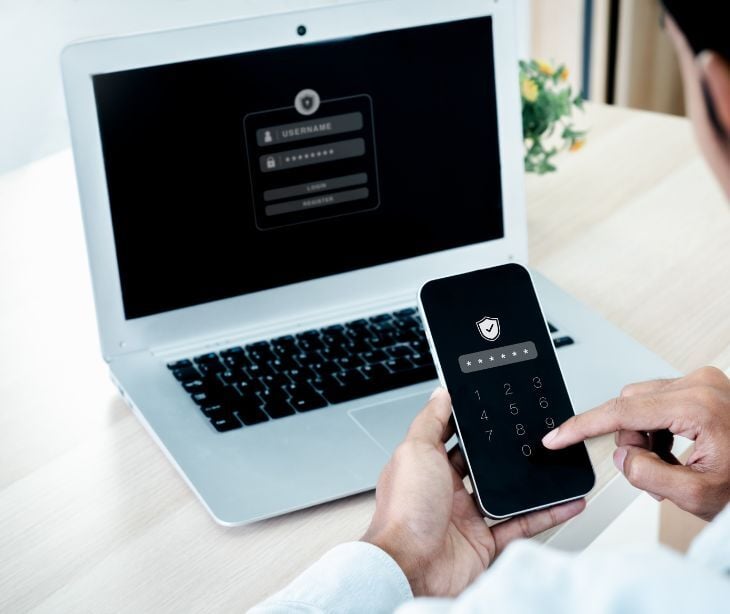
Authentication measures in healthcare help ensure that only authorized users can access patient records, medical systems, and other sensitive information. These safeguards are particularly important given the confidential nature of health data and the potential consequences of unauthorized access, including privacy violations and harm to patients.
What is authentication?
According to Microsoft, “Authentication is the process that companies use to confirm that only the right people, services, and apps with the right permissions can get organizational resources.” It does this by verifying the identity of an individual, system, or entity to confirm that it is who or what it claims to be. This process is fundamental to information security and is implemented to control access to resources, systems, or data.
User authentication helps prevent unauthorized access, protecting sensitive information from being accessed by individuals without proper authorization.
Go deeper: What is user authentication?
Why is user authentication important?
User authentication is important because “it helps organizations protect their systems, data, networks, websites, and applications from attacks,” says Microsoft. “It also helps individuals keep their personal data confidential, empowering them to conduct business, such as banking or investing, online with less risk.”
In healthcare, effective authentication helps protect patient health information from unauthorized access while reducing the risk of data breaches, privacy violations, and other security threats.
Authentication measures in healthcare
Healthcare organizations can use several authentication measures to strengthen access security. IBM identifies the following as suitable authentication methods that can be used in any industry, including the healthcare industry:
Passwords
Passwords are one of the most common authentication methods and require users to provide a secret combination of characters to verify their identity. Strong, unique passwords can help reduce the risk of unauthorized access.
Read also: 5 Steps to improve password security in healthcare
Multi-factor authentication (MFA)
MFA requires users to provide two or more authentication factors before gaining access. These factors can include something the user knows, such as a password; something they have, such as a security token or mobile device; or something they are, such as a fingerprint or facial characteristic.
Read also: More ways to sign in securely with multi-factor authentication
Biometric authentication
Biometric authentication verifies users based on unique physical or behavioral characteristics, including fingerprints, facial recognition, or voice recognition.
One-time passwords (OTPs)
OTPs are temporary authentication codes that can be used to verify a user's identity during login. Unlike static passwords, these codes are generally valid for only a limited period or a single authentication attempt.
Adaptive authentication
Adaptive authentication assesses contextual information, such as the user's location, device, behavior, or the sensitivity of the requested resource, to determine whether additional authentication is necessary.
Passwordless authentication
Passwordless authentication allows users to access systems without entering a traditional password. Methods can include biometrics, security keys, and passkeys.
Single sign-on (SSO)
SSO allows users to authenticate once and access multiple authorised applications without having to log in separately to each system. This can simplify access management across healthcare environments with multiple applications and platforms.
Related: A guide to HIPAA and access controls
Choosing the right authentication method
Choosing an appropriate authentication method requires healthcare organizations to consider both security and usability. According to the National Cyber Security Centre (NCSC), organizations should consider their users' needs and characteristics, the required level of security, and the potential limitations of each authentication method.
For healthcare organizations, the appropriate approach may depend on factors such as the sensitivity of the information being accessed, the user's role, the systems involved, and how frequently users need to authenticate. For example, systems containing highly sensitive patient information may require stronger authentication measures than lower-risk applications.
Healthcare organizations should also consider user experience and accessibility when selecting an authentication method. Authentication that is difficult to use may lead to frustration or workarounds, particularly in healthcare environments where staff need timely access to clinical systems. The NCSC recommends considering both security and usability and, where appropriate, offering users a choice of authentication methods.
Read also: HIPAA Compliant Email: The Definitive Guide
FAQS
What are the three types of authentication?
Authentication factors can be classified into three groups:
- Something you know: a password or personal identification number (PIN);
- Something you have: a token, such as a bank card;
- Something you are: biometrics, such as fingerprints and voice recognition.
What does authentication throughout a patient's medical record signify?
Authentication is an attestation that something, such as a medical record, is genuine. The purpose of authentication is to show authorship and assign responsibility for an act, event, condition, opinion, or diagnosis.
How does two-factor authentication protect you?
Using two-factor authentication is like using two locks on your door—and is much more secure. Even if a hacker knows your username and password, they can't log in to your account without the second credential or authentication factor.
