


.svg)
.svg)
.svg)
.svg)
.svg)
.svg)
.svg)
.svg)
.svg)
.svg)
.svg)
.svg)
.svg)
.svg)
.svg)
.svg)
.svg)
.svg)
.svg)
.svg)
.svg)

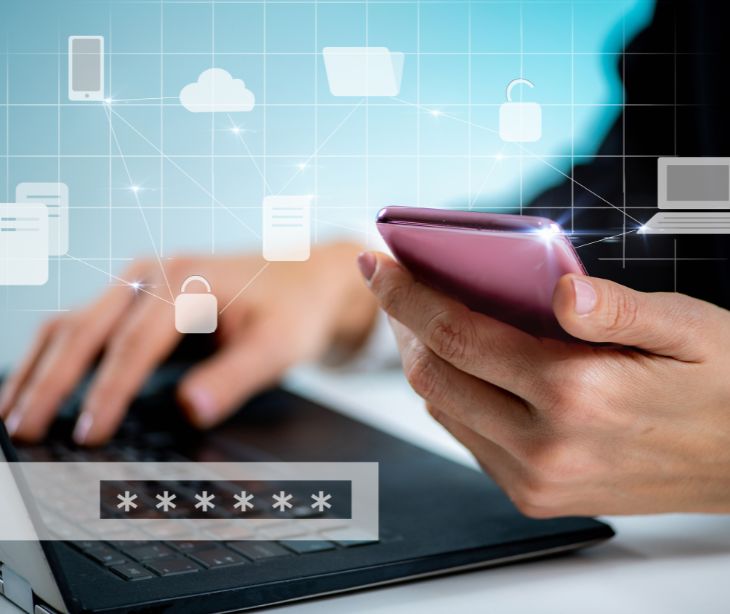
To comply with HIPAA, healthcare providers must follow strict rules designed to protect patients’ sensitive information, known as protected health information (PHI). This includes making sure that any communication involving patient data is secure. In this regard, multi-factor authentication (MFA) emerges as a powerful tool, significantly enhancing HIPAA compliance and fortifying the defense against unauthorized access and data breaches.
What is multi-factor authentication?
Multi-factor authentication (MFA) is a security measure that requires users to provide multiple forms of identification to verify their identity before gaining access to a system, application, or service. It is an added security measure that goes beyond the traditional usage of usernames and passwords by creating additional security layers that make it harder for unauthorized individuals to breach confidential information or accounts.
According to Microsoft, MFA uses three types of authentication:
- “Something you know—a password, passkey, PIN, or security question.
- Something you have—a mobile device, smart card, or hardware token.
- Something you are—biometrics such as a fingerprint, a face scan, or voice recognition.”
Go deeper: How MFA is becoming the new standard for online security
Understanding HIPAA compliance and email security
HIPAA is a federal law that safeguards the privacy and security of PHI while facilitating the smooth flow of healthcare information. Covered entities and their business associates must adhere to HIPAA regulations to protect patient data from unauthorized access, disclosure, and misuse. With regard to email communication, the HHS states that “The Privacy Rule allows covered health care providers to communicate electronically, such as through e-mail, with their patients, provided they apply reasonable safeguards when doing so.”
According to the study E-mail and oncology: a survey of radiation oncology patients and their attitudes to a new generation of health communication, patients favored using email to communicate with their healthcare providers because it offered increased convenience, efficiency, and timeliness when discussing general health issues. Additionally, 80% favored posing a health-related question to their physicians over email. With the widespread adoption of the internet, email has become a popular communication tool in healthcare, with more than 200 billion emails sent each day worldwide.
However, despite its advantages and preferred use, email also comes with risks. It can be vulnerable to cyber threats such as interception, phishing attacks, and unauthorized access. These risks make it more challenging for healthcare organizations to remain HIPAA compliant.
Related:
- The evolution of healthcare communication methods
- The healthcare digital transformation
- HIPAA Compliant Email: The Definitive Guide
The role of multi-factor authentication (MFA) in email communication
Multi-factor authentication (MFA) offers a robust approach to enhancing email security by requiring users to provide two or more forms of authentication before accessing sensitive information. According to an article titled, Secure your accounts and devices with multi-factor authentication, by the Canadian Centre for Cyber Security, “Organizations and individuals can benefit from using MFA to secure devices and accounts.”
Benefits of MFA
According to the Cybersecurity and Infrastructure Security Agency (CISA), the benefits of MFA include:
- Stronger account security: Since MFA requires “a combination of two or more different authenticators” to verify identity, it makes it harder for attackers to gain access.
- Protection even if passwords are compromised: According to CISA, “even if one authenticator becomes compromised, unauthorized users will be unable to meet the second authentication requirement,” helping prevent account takeovers.
- Reduced risk of common cyberattacks: MFA helps defend against threats such as phishing, password spraying, and credential theft by adding an extra verification step beyond passwords.
- Prevents unauthorised access to sensitive systems: CISA notes that MFA makes it more difficult for cyber threat actors to access systems like “email, remote access technology, and billing systems.”
- Supports healthcare data protection: By securing email accounts and login systems, MFA helps protect sensitive patient information and reduce the risk of data breaches.
- Works alongside existing systems: MFA enhances security without replacing current login processes, making it easy for organizations to adopt without major workflow disruptions.
- Reduces likelihood of data breaches: Since many breaches begin with compromised credentials, MFA acts as a barrier that prevents attackers from escalating access.
Implementing MFA
To implement MFA, you require a primary credential, like a username and password, and at least one additional factor. This additional factor can take several forms, including:
- Something you have: A physical device like a smartphone, a hardware token, or a one-time passcode sent via SMS or generated by an authenticator app.
- Something you are: Biometric identifiers such as a fingerprint, facial recognition, or voice recognition.
According to Microsoft, the implementation steps involve a couple of steps:
- The first step is user enrollment, where users register a verification method such as a device, biometric factor, or authenticator app. This links the user to a trusted method of confirming their identity.
- The second step is device registration, which involves pairing trusted devices with the user’s account. This ensures that login attempts can be verified using devices that have already been approved.
- The final step is policy enforcement, where organizations define and apply MFA rules. These policies can be tailored based on factors such as user role, level of risk, or login location, helping ensure that stronger verification is used when and where it is needed most.
This flexibility allows businesses to strengthen security without making sign-ins unnecessarily difficult for users.
Its adoption in healthcare settings requires careful planning and implementation to ensure seamless integration with existing email systems and workflows. Key considerations include:
- User education and training: Healthcare organizations must educate users about the importance of MFA and provide training on how to use it effectively.
- Integration with email platforms: MFA solutions should seamlessly integrate with popular email platforms used in the healthcare industry, such as Paubox, Microsoft Exchange, and Google Workspace. Compatibility and ease of deployment are essential factors to consider when selecting an MFA solution.
- Policy development and enforcement: Healthcare providers should establish clear policies and procedures governing the use of MFA and enforce compliance across the organization. This includes defining acceptable authentication methods, setting password complexity requirements, and specifying user access levels.
- Continuous monitoring and assessment: MFA implementation is not a one-time event but an ongoing process. Healthcare organizations should regularly monitor and assess the effectiveness of their MFA solutions, making adjustments as needed to address emerging threats and vulnerabilities.
FAQs
Is MFA mandatory for HIPAA compliance?
While HIPAA does not explicitly mandate the use of MFA, it is considered a best practice for enhancing security and is often recommended by security experts and regulatory bodies. Healthcare organizations are required to implement appropriate safeguards to protect PHI, and MFA is recognized as an effective measure for achieving this goal.
What types of authentication factors are commonly used in MFA for healthcare organizations?
Common authentication factors used in MFA for healthcare organizations include, but not limited to:
- passwords,
- security tokens,
- biometric data (such as fingerprints or facial recognition),
- one-time passcodes sent via SMS or email, and
- smart cards.
Does implementing MFA require significant investment in infrastructure and resources?
The cost of implementing MFA can vary depending on factors such as the size of the organization, the complexity of the MFA solution, and the level of customization required. While there may be upfront costs associated with purchasing and deploying MFA solutions, the long-term benefits in terms of improved security and regulatory compliance often outweigh the initial investment.
Many MFA solutions offer flexible pricing models and scalable options to accommodate the needs and budgets of healthcare organizations of all sizes.
